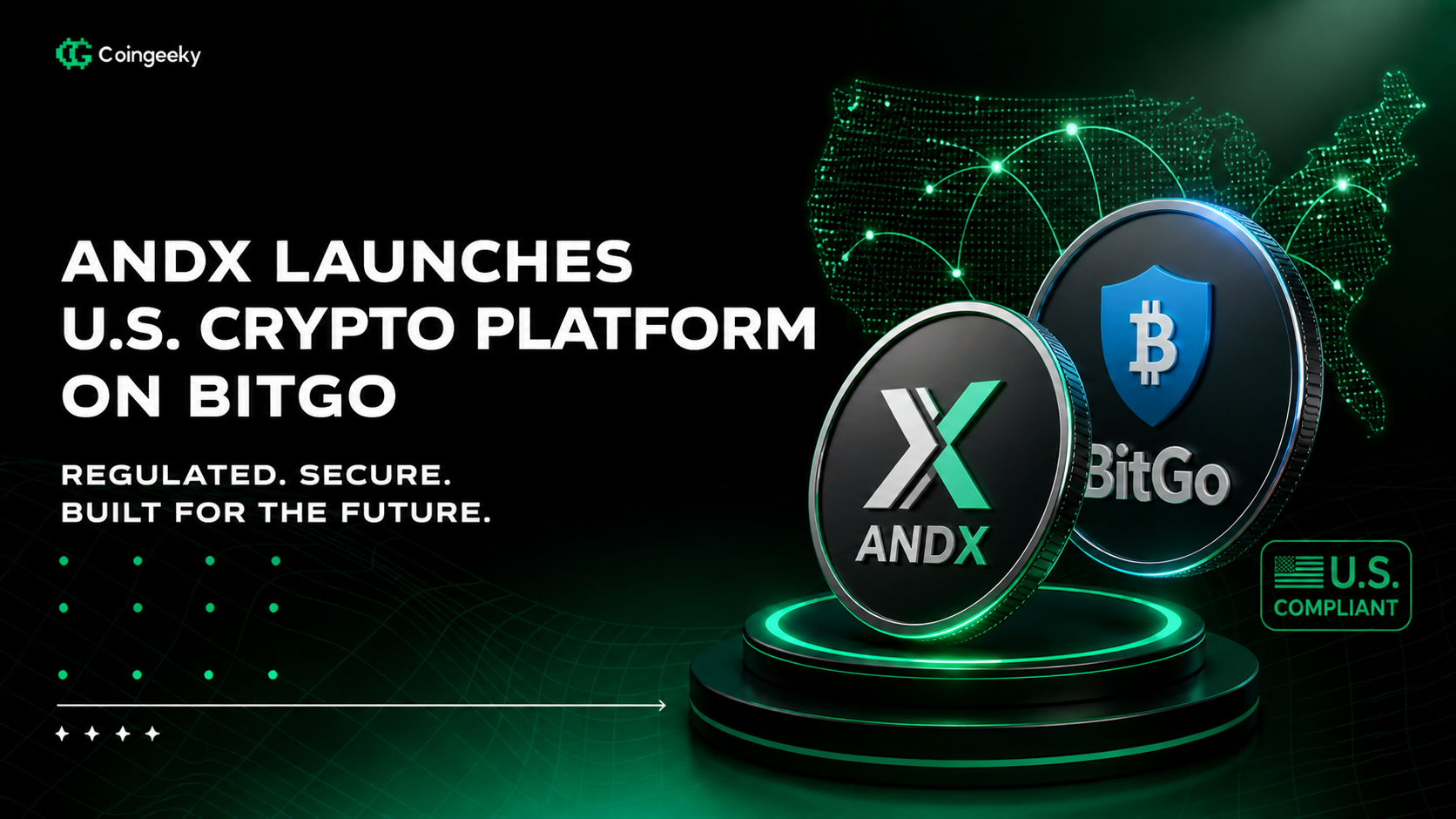

A new player is entering the U.S. crypto exchange landscape as AndX officially launches its digital asset trading platform, powered by infrastructure from BitGo.
The launch marks a significant step for AndX as it expands into one of the world’s most tightly regulated crypto markets. By building on BitGo’s Crypto‑as‑a-Service (CaaS) framework, the platform is able to offer trading, custody, and asset management services across all 50 U.S. states under a regulated structure.
This approach allows AndX to bypass the complexity of building core infrastructure from scratch while still meeting compliance standards expected in the U.S. market.
Built on Institutional‑Grade Infrastructure
At the core of the launch is BitGo’s infrastructure, which includes custody services provided through its federally regulated trust entity, BitGo Bank & Trust.
This setup gives AndX access to:
secure asset custody with institutional‑grade controls
integrated trading and settlement systems
compliance frameworks aligned with U.S. regulations
BitGo’s platform also includes insurance coverage and API‑driven architecture designed to simplify operations for partners.
For users, this translates into a platform where they can buy, sell, and hold digital assets within a regulated environment, something that has become increasingly important as institutional participation in crypto grows.
Focus on AI, Tokenization, and Multi‑Asset Trading
While infrastructure is handled by BitGo, AndX is positioning itself as more than just a standard crypto exchange.
According to the company, the platform is designed as an AI‑native financial ecosystem, combining multiple services into a single interface. These include:
crypto trading
tokenized real‑world assets (RWAs)
foreign exchange and commodities access
cross‑border payments
The platform also integrates AI‑driven insights and predictive tools, aiming to help users make more informed trading decisions.
CEO Viru Raparthi said the partnership with BitGo allows AndX to focus on innovation rather than backend complexity, bringing together trading, payments, and tokenization into one unified experience.
A Growing Trend in Crypto Infrastructure
The AndX launch highlights a broader trend in the crypto industry, the rise of “infrastructure‑as‑a-service” models.
Instead of building everything internally, newer platforms are increasingly relying on established providers like BitGo to handle:
custody
security
compliance
and operational workflows
This model allows companies to launch faster while still meeting regulatory requirements, particularly in markets like the U.S., where compliance barriers are high.
At the same time, it reflects the growing importance of regulated custody solutions, especially as more institutional investors enter the space.
Expanding Global Footprint
AndX is not starting from scratch. The platform already operates in several international markets, including:
the UAE
India
Brazil
South Africa
and the Philippines
Its U.S. launch represents a key milestone in its global expansion strategy, positioning it to compete with both centralized exchanges and emerging Web3 platforms.
The Bigger Picture
The timing of the launch comes as the crypto market continues to evolve toward more structured and regulated frameworks.
With increasing scrutiny from regulators and rising demand from institutional investors, platforms that can combine innovation with compliance are gaining an edge.
By leveraging BitGo’s infrastructure, AndX is effectively positioning itself at that intersection, offering advanced features while maintaining regulatory credibility.
The Bottom Line
AndX’s U.S. debut is less about entering the market and more about how it’s doing it.
By building on BitGo’s regulated infrastructure, the platform is aiming to deliver a mix of security, compliance, and advanced trading features, all in one place.
Whether it can stand out in an increasingly competitive exchange landscape will depend on user adoption and execution, but the foundation it’s built on signals a clear direction for where crypto platforms are heading.