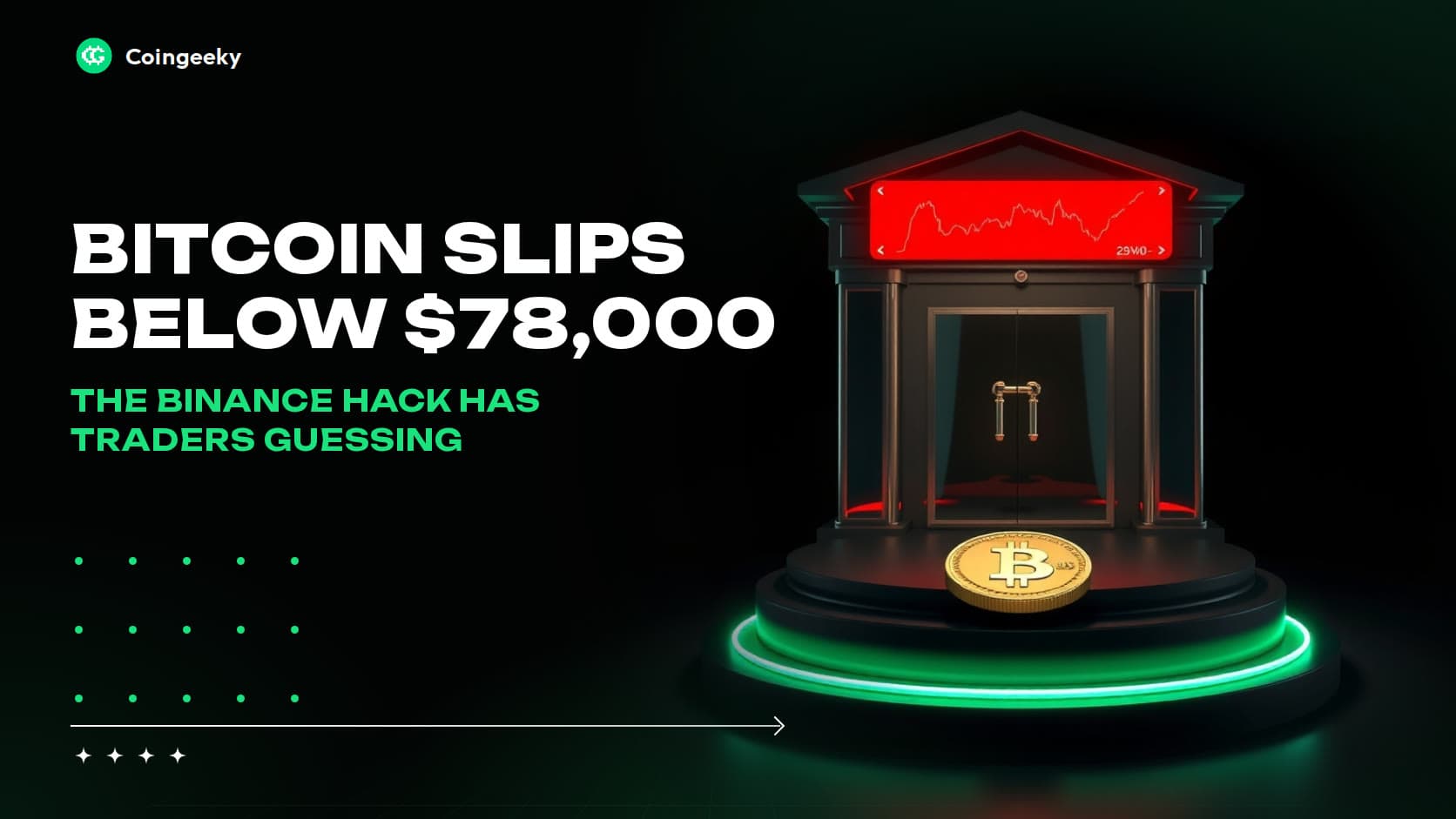

Three billion dollars. That is the verified sum Binance now says it has frozen after a hack that has shaken the largest exchange in crypto, up from the $2.54 billion it first reported. The money is the headline, but the price action is what most holders felt overnight.
Bitcoin is trading below $78,000 and touched roughly $77,100 early Friday, down about 4.8% on the day, according to Cointelegraph's market report. Ether gave up 5.7% and changed hands near $2,217. BNB, the token tied to Binance's own chain, took the sharpest hit among the majors, falling more than 8% to around $693.
Bitcoin Below $78,000 Is a Confidence Story
Nobody has explained publicly how the attackers got in, and that gap matters. A hack with a known cause can be priced; one without a cause leaves traders guessing about who else shares the weakness.
Binance did the two things an exchange can do in the first hours: it promised to cover every dollar of user losses, and it stopped all deposits and withdrawals while it runs security checks. The pledge reads well on paper. The freeze is what customers will remember, since an exchange you can't pull money from is, for the moment, just a screen.
I wouldn't read the selloff as a verdict on Bitcoin itself, because nothing about the network changed overnight. What changed is how many people were willing to hold risk through a weekend with the biggest venue in the industry locked down.
Sentiment shows it. The Fear and Greed Index for Bitcoin dropped to 30, which sits in the "fear" zone and marks its weakest reading since Aug. 14. Read one way, that is jumpy rather than panicked, and a reading in the teens would tell a different story. Read another way, a single day's number says little about how holders will behave if the freeze drags on.
DeFi took a harder knock than Bitcoin
The bigger percentage losses landed on decentralized finance. Aave's token dropped 11.3% to $118.54, and Uniswap's UNI fell 10.4% to $6.48, per CoinGecko figures cited in the same report.
Aave's response deserves a close look. As a precaution, the lending protocol paused new deposits and new borrowing across its community‑run V3 and V4 markets. It said its contracts were unaffected, and that people holding positions could still pull their funds out and pay down what they owe. It pulled the throttle on new risk and left the exit open. That is the right order of operations, and a useful contrast with a centralized venue that shut both doors.
Why would a Binance problem touch Aave at all? Probably because a lot of borrowed, on‑chain exposure is funded with assets that move between exchanges and lending pools, and nobody wants to add loans while the plumbing is uncertain. That is my read, not something either platform has stated.
What the Attribution Could Change
A separate Cointelegraph headline says crypto investigators have tied the theft to North Korea and put the figure at $6.3 billion, well above the $3 billion Binance says it has frozen. There are two readings of that gap. Either a lot of stolen funds have already moved, or the two counts measure different things. I'd hold both numbers loosely until Binance or an independent firm publishes the full accounting.
If the North Korea link holds, the pattern is familiar. Stolen funds from state‑linked groups tend to be split up and pushed through cash‑out routes quickly, which is why the speed of any freeze matters more than the size of the pledge.
Three things to watch from here:
- Withdrawals: when Binance reopens them, and whether users rush the door, will tell us more than any price chart.
- The cause: a clear explanation of the breach would let the market stop guessing.
- Aave's markets: if V3 and V4 borrowing reopens quickly, the DeFi scare was contained. If it doesn't, expect the pain to spread beyond one exchange's customers.
Bitcoin has sold off on worse news and recovered. Whether it does so this time depends less on the $3 billion than on how fast Binance can show its doors are safe to reopen.