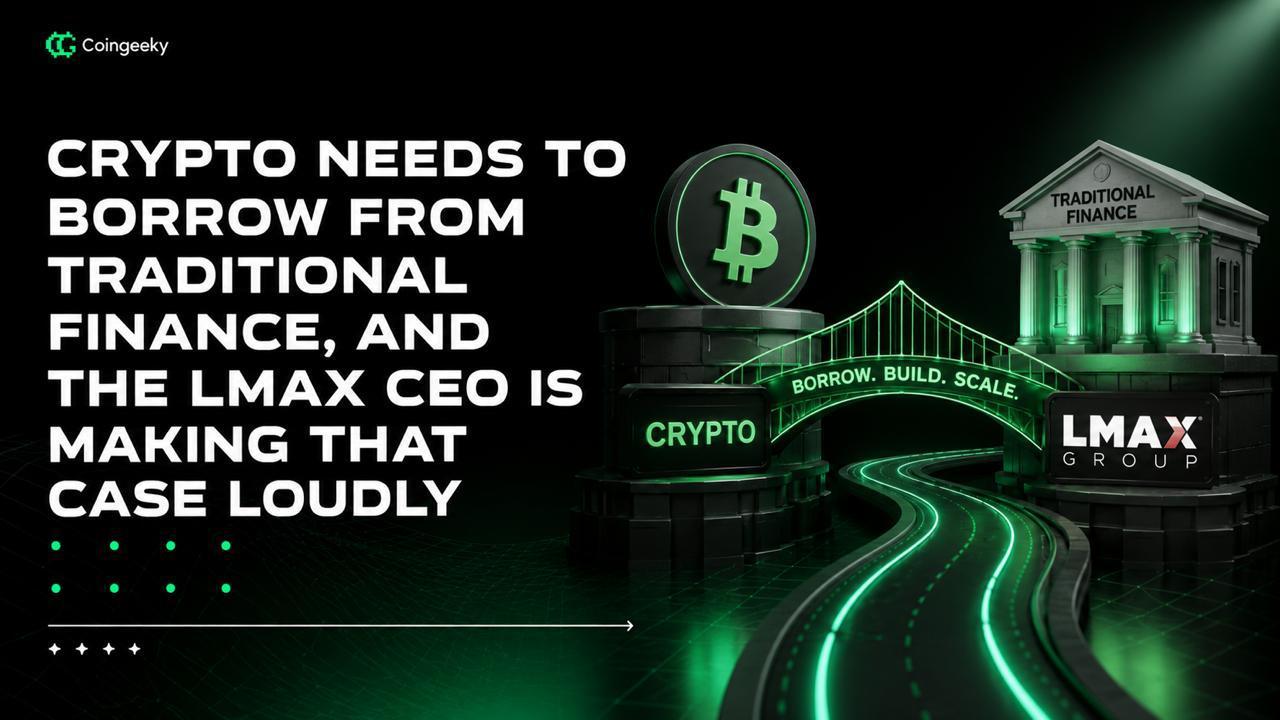

Here's an argument that would have been heresy in crypto circles five years ago, but makes a lot more sense today: the next phase of digital asset growth probably requires more centralization, not less.
That's the core of what David Mercer, CEO of institutional trading venue operator LMAX Group, told CoinDesk. And coming from someone who has spent years building regulated, institutional‑grade trading infrastructure for both foreign exchange and crypto, it's worth sitting with.
Centralization Solves a Real Problem
Mercer's argument isn't ideological, it's structural. Centralized markets concentrate liquidity, improve price discovery, and create stability during periods of volatility. That's not a feature of legacy finance that needs to be replaced. It's a feature that works, and crypto keeps rediscovering it the hard way.
He pointed out that even the most decentralized experiments in crypto history have gravitated toward centralized coordination points when things get messy. DeFi protocols that marketed themselves as fully trustless ended up relying on governance interventions during crises. Peer‑to‑peer marketplaces collapsed into centralized order books.
Crypto, Mercer argues, needs to learn from hundreds of years of organized capital markets rather than pretend those lessons don't apply.
What's Been Missing All Along
When LMAX launched its institutional crypto venue back in 2018, Mercer expected the credit and clearing infrastructure that underpins traditional markets to quickly emerge in digital assets. Eight years later, that infrastructure still hasn't arrived at scale, and he believes its absence is one of the single biggest constraints holding institutional capital back.
Traditional markets function because trading sits on top of a vast network of prime brokerage relationships, clearing brokers, and credit facilities. That's what global capital markets are actually built on. Crypto has largely tried to operate without those layers, and the friction shows.
LMAX's foreign exchange business recently posted its strongest first quarter on record at roughly $50 billion in average daily volume. Those numbers are possible because the credit and clearing infrastructure underneath it works. Crypto doesn't have that yet.
The Collateral Problem Is the Most Urgent One
The challenge Mercer flags most urgently is collateral mobility. Right now, traditional assets, digital assets, and stablecoins each sit inside separate operational and regulatory environments. They can't move freely between those silos, which destroys capital efficiency and limits how institutions can respond when market opportunities appear.
He described what happened during the volatile first quarter of this year, investors rotating between equities, gold, and Bitcoin, as a perfect example of the problem. If capital is pre‑positioned at one venue, it simply can't be deployed elsewhere fast enough when conditions shift.
His view is that stablecoins and tokenized assets are the bridge. Digital money, he said, will ultimately make collateral management far more efficient across both traditional and digital markets, but only once the credit mechanisms that make that possible are properly built out.
Institutions Are Already Studying This
The directional data from Mercer's conversations with asset managers this year tells a story. Only about 20% said they planned to begin trading digital assets directly in the near term. But more than 40% said they are actively examining onchain payments, settlements, and collateral management. Around 91% said they are already engaging with stablecoins in some capacity.
The institution that says it isn't touching crypto is often already running stablecoin pilots quietly. That gap between public positioning and private action is closing fast.
Where This Ends Up
Mercer's end state is a fusion of traditional finance and digital assets, tokenized money, interoperable collateral, and institutional‑grade credit infrastructure operating across both worlds simultaneously.
The real inflection point for digital assets, he said, won't be Bitcoin's price. It will be the moment a highly efficient collateral layer finally exists.
I find that framing more honest than most of what gets said in this space. The price is noise. Infrastructure is what actually moves capital at scale, and building it properly means accepting that some of what traditional finance got right is worth keeping.