
Here's the short version before I talk myself into a longer one. For most people, crypto belongs in a small corner of the portfolio, not the middle of it. I usually tell friends to keep it under ten percent of the money they actually invest until they genuinely know what they're doing. Some push it to twenty. A few go all in, and those are the ones who message me at two in the morning when the market turns on them.
But honestly, the percentage question is the wrong place to start, even though it's the one everyone asks first.
The number isn't really about crypto
The right amount has far more to do with your life than with any chart. Do you have an emergency fund? Three to six months of expenses sitting in a dull savings account you don't touch? If the answer is no, then that comes first, full stop. Bitcoin can wait a few months while you build it. Your rent cannot wait for Bitcoin to recover.
I learned this one the slightly embarrassing way. Years ago I had money in crypto and almost nothing in cash, and when a real expense landed I had to sell at an ugly moment to cover it. The market wasn't the problem. My setup was. The order I'd done things in was backwards, and the market simply found the gap.
Get the foundation in before the fun part
So before you think in percentages at all, get two things sorted. First, that emergency fund, in cash, boring and reachable. Second, any high‑interest debt cleared, because no realistic crypto return reliably beats the interest a credit card charges you. Pay that down and you've earned a guaranteed return, which is a phrase crypto can almost never honestly use.
Once those are handled, then the question of how much to allocate actually means something. Until then, you're not investing. You're exposed, and hoping the timing is kind.
A split that tends to hold up
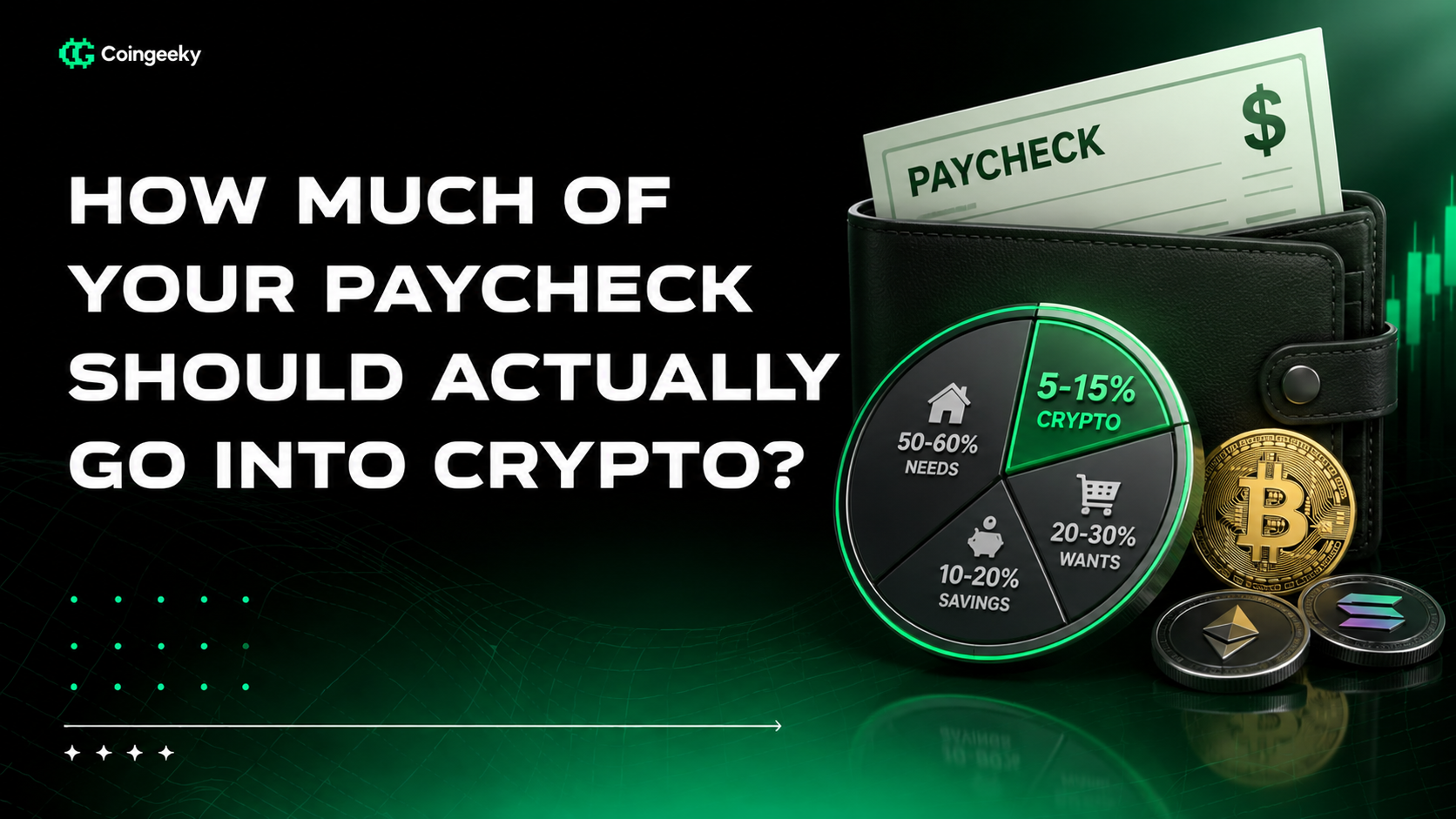
With the basics covered, a rough shape that works for a lot of people: the large majority of your long‑term money goes into steady, diversified, unexciting things. Index funds, the workhorses nobody brags about at parties. A smaller slice, maybe five to ten percent, goes into crypto. And inside that crypto slice, lean toward the assets that have already survived a cycle or two rather than whatever a stranger is shilling in your replies this week.
Think of it in layers. Cash savings at the base, holding everything up. Steady investments in the middle. Then a thin, spicy crypto layer on top, funded only with money you could genuinely watch disappear without it changing how you live. If the top layer wobbles, and it will, the foundation keeps your actual life steady.
Position sizing beats picking winners
Here's the part that quietly decides your outcome, more than any coin you choose: how much you put in, not how clever your pick is. A ten‑times gain on money you couldn't afford to risk still wrecks you, because you'll panic and sell at the worst possible moment on the way there. A modest gain on a position you can hold calmly, through the scary dips, compounds into something that actually matters.
So pick a number you could defend to yourself on a genuinely bad day. Write it down somewhere. When the green candles show up and every instinct screams to triple it, that note is often the only thing standing between you and a two a.m. message to someone like me.
Buy slowly, and ignore the screenshots
Don't deploy your whole crypto allocation in one excited afternoon either. Spread the buys over weeks. Dollar‑cost averaging is dull, but it quietly removes the single most dangerous variable in investing, which is your own sense of timing. You will not catch the bottom. Nobody does consistently. The people who claim they did usually got lucky once and went very quiet the next time around.
And the screenshots, the ones showing somebody turning five hundred dollars into a house deposit, leave out the thousands who turned five hundred into four dollars chasing the same trade. Survivorship bias runs this entire corner of the internet. Size your bet for the world those quiet losers lived in, not the one in the screenshot.
The honest bottom line
Crypto can be a genuinely useful, high‑upside part of a portfolio. It's a terrible foundation for one. Keep it small, fund it with money you can afford to be wrong about, and get there only after the boring layers underneath are solid. Do that and the swings stop feeling like emergencies. Skip it, and even a good year somehow manages to feel like stress.