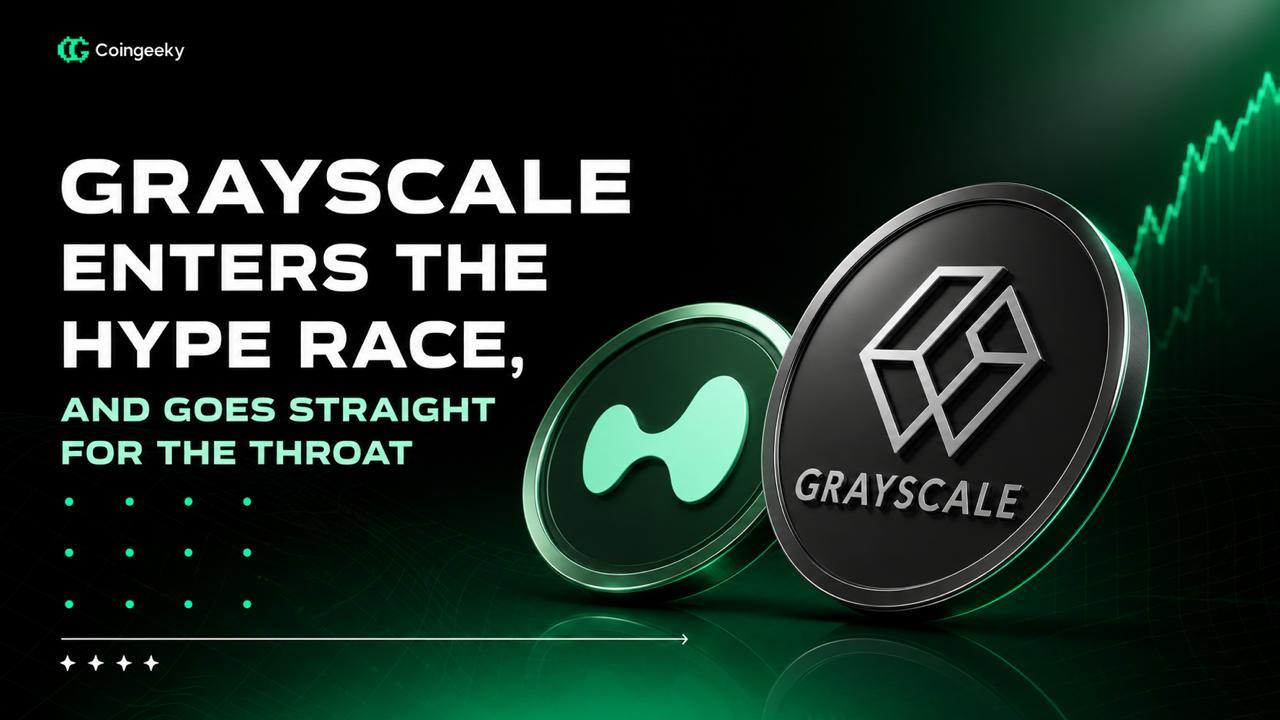

That headline would have sounded absurd eighteen months ago. Today it is a statement of fact coming from one of the most connected institutional crypto trading firms in the market.
Hyperliquid has emerged as one of the most liquid trading venues in the crypto market, attracting growing interest from hedge funds and institutional investors as capital rotates away from bitcoin and ether, according to Joshua Lim, global head of markets at FalconX.
"For things like HYPE, where there's broad consensus that it's an allocatable asset, there's a ton of liquidity. It's not hard to trade it," Lim said in an interview. "HYPE is probably on some days more active than Ethereum for us."
When a platform serving institutional hedge funds starts routing more daily volume through a three‑year‑old DeFi protocol than through the world's second‑largest blockchain, the market needs to pay attention.
Why Bitcoin and Ethereum Are Losing the Attention Trade
The rotation away from BTC and ETH is not about fundamentals. It is about opportunity. Hedge funds chase volatility and early access to emerging narratives. Right now, Bitcoin and Ethereum are offering neither.
Lim said FalconX expects major cryptocurrencies to remain range‑bound over the next few months because of macroeconomic uncertainty, ETF outflows and competition from other speculative investments. "What it is translating to is actually implied volatility, so the price of options is near all‑time lows," Lim said. "People don't think bitcoin and ether are going to move very much."
When options on an asset are priced at near all‑time lows, it means the market is not expecting big moves. For a hedge fund that makes money from big moves, that is a signal to look elsewhere.
Where the Speculative Money Is Actually Going
"The altcoins are moving a lot," Lim said. "That's where the speculative money is going. It's into things like HYPE and Zcash and Venice. AI‑associated tokens are performing very well."
The pattern is consistent with what has happened in previous crypto cycles, when the large caps stall, speculative capital migrates to higher‑beta assets with stronger narratives. In the current environment, that means AI‑linked tokens, DeFi infrastructure plays, and anything connected to the decentralised trading thesis that Hyperliquid embodies.
The Pre‑IPO Perps That Nobody Else Can Offer
Beyond the HYPE token itself, Hyperliquid is winning institutional business because it consistently offers access to markets that simply do not exist anywhere else.
Lim said hedge funds are increasingly using the platform's derivatives products because they provide access to markets that are difficult or impossible to trade elsewhere. "They're very good at launching things early," he said, pointing to Hyperliquid's pre‑IPO perpetual contracts tied to companies such as SpaceX. "We have hedge funds who there's no other way to really trade that in a liquid way."
SpaceX is weeks away from its Nasdaq debut. For a hedge fund that wants directional exposure to that listing before it happens, Hyperliquid is currently the only credible liquid venue in the world. That kind of exclusive early access is exactly what institutional traders are willing to pay for.
The $800M Revenue Platform With Bigger Ambitions
The growing interest in Hyperliquid reflects a broader bet that crypto‑native trading infrastructure can expand beyond digital assets. The platform generated about $800 million in revenue in 2025 and has steadily broadened its product lineup from crypto perpetual futures into tokenized stocks, commodities and prediction‑style markets.
Grayscale has argued that Hyperliquid's long‑term significance may lie less in the HYPE token itself and more in its potential to serve as a 24/7 trading venue for a wide range of financial assets.
The One Wall Still Standing
Despite everything Hyperliquid has built and the institutional appetite behind it, one significant obstacle remains.
Regulatory developments remain a key uncertainty, particularly because the platform currently restricts US users, but supporters increasingly view Hyperliquid as a test case for how blockchain‑based markets could compete with traditional exchanges in the future.
The US market is the deepest pool of trading capital in the world. Hyperliquid cannot access it yet. But with institutions routing more volume through the platform than through Ethereum on some days, from outside the US alone, the question is no longer whether Hyperliquid is serious. It is what happens when the regulatory wall eventually comes down.