
Why Kintara Has My Attention
I've tracked hundreds of play‑to‑earn projects over the years. Most of them overpromise, underdeliver, and disappear within six months. Kintara feels different, not because it's making grand promises, but because it's actually live, playable, and already running a functioning on‑chain economy on Solana.
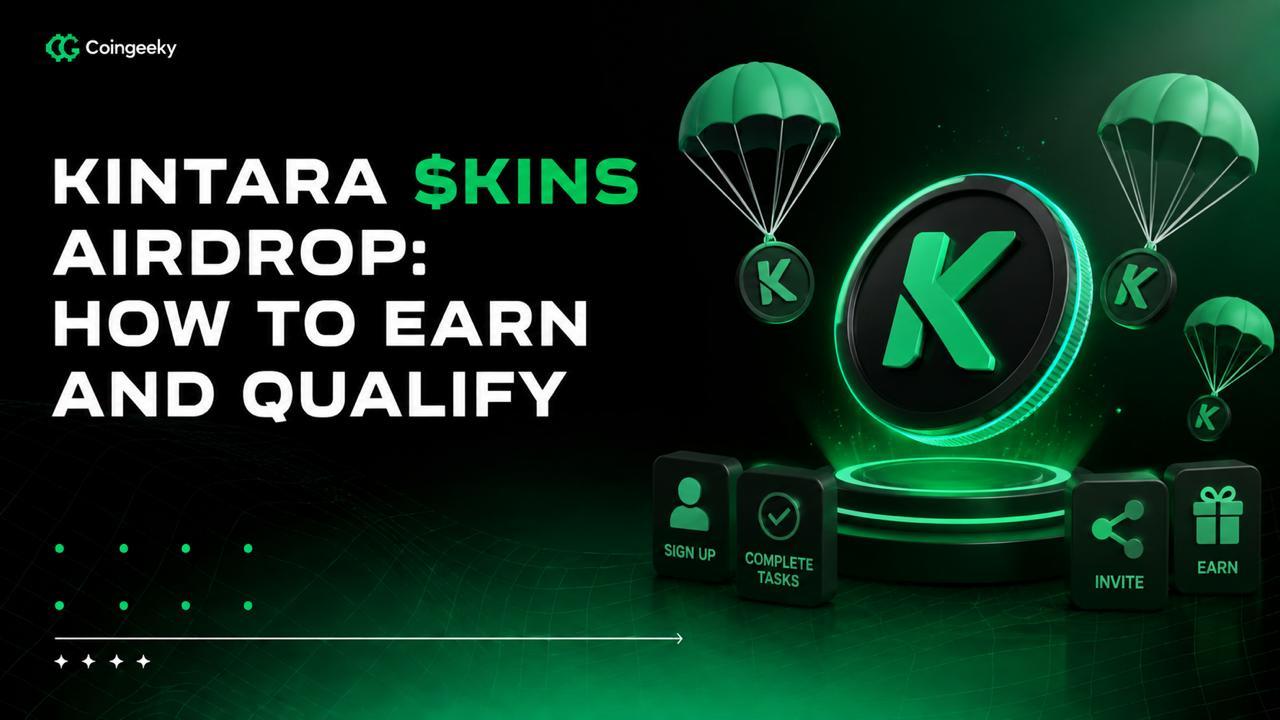
There's no confirmed token airdrop as of now. I want to be straight about that. But $KINS is already live and tradeable, you earn it directly through gameplay, and early players who build up strong in‑game activity could be very well positioned if the team launches future reward programs. Getting in now, while the player base is still small, makes sense to me.
What Kintara Actually Is
Kintara is a browser‑based isometric MMO built on Solana. Think old‑school sandbox gameplay, chopping wood, mining stone, fishing, cooking, fighting monsters, and trading with other players across several connected realms. It's familiar territory for anyone who's spent time in games like RuneScape or Tibia, except here the economy runs on‑chain.
The token at the center of everything is $KINS, with a total supply of 1 billion. It powers the in‑game economy and is literally the key to entry, you need at least 1 $KINS in your wallet just to access the game.
How the Economy Works
This is the part I find genuinely interesting. You don't earn $KINS by grinding and magically receiving tokens. You earn in‑game gold through resource gathering, daily quests, and spinner prizes, then sell that gold to other players on the Marketplace in exchange for $KINS. The buyer pays from their wallet on‑chain, and you receive 95% of the sale price immediately.
It's a real player‑driven economy. When demand for gold is high, $KINS flows faster. When the market is quiet, you sit on inventory. That dynamic keeps things honest.
The game also has a burn mechanism. Paid spinner spins cost $KINS, with half of that burned and half going to the treasury. Every gold‑for-$KINS Marketplace sale routes 5% to the treasury. These sinks are designed to keep supply in check over time.
Getting Started: What You Actually Need
First, get some SOL into a Solana wallet, Phantom works well. You'll need it to buy $KINS and cover transaction fees. Head to PumpSwap, connect your wallet, and swap SOL for $KINS. Buy at least 1 $KINS to unlock the game, but I'd grab a small extra amount to cover paid spins down the line.
Once you're holding $KINS, open Kintara in your browser, connect the same wallet, and you're in.
Starting Out in the Game
New characters spawn on the Mainland with nothing in their inventory. Follow the tutorial NPC near spawn and it'll hand you your starter tools, an axe, pickaxe, fishing rod, and hammer. Open your inventory with the I key and drag each tool to a hotbar slot.
From there, it's a straightforward gathering loop. Chop trees for wood, mine rocks for stone and coal, fish at ponds in Whisperwood or The Pond. Check your daily quest log regularly, these give gold, XP, and items for simple tasks like chopping a set amount of wood or killing mobs. The quests are fast and easy, and I'd never skip them.
How I'd Play to Maximise Earnings
The free spinner spin unlocks twice a day once your average skill level hits 5. I'd prioritise getting there quickly, it draws from the same prize pool as paid spins and costs you nothing.
Always bank your stacks on the Mainland before heading into the Wilderness. Dying in the Wilderness drops your items, and recovering them from a tombstone is annoying. The Mainland, Whisperwood, and The Pond are safe zones with no PvP and no item loss, so build your skills there first.
Cooking fish only counts toward your cooking XP at the Roast Pit in The Pond, not at Mainland firepits. That's a small detail that tripped me up early on.
The Bigger Picture
Kintara isn't handing out free tokens. You earn here by actually playing, and the economy works because real players are buying and selling on‑chain. For a crypto gaming project, that's a meaningful foundation.
No airdrop has been confirmed yet, but the team has a running product, an active economy, and 1 billion KINS tokens in total supply. Early players who build genuine in‑game history tend to matter when reward programs eventually launch. I'd rather be early and wrong than late and right on this one.