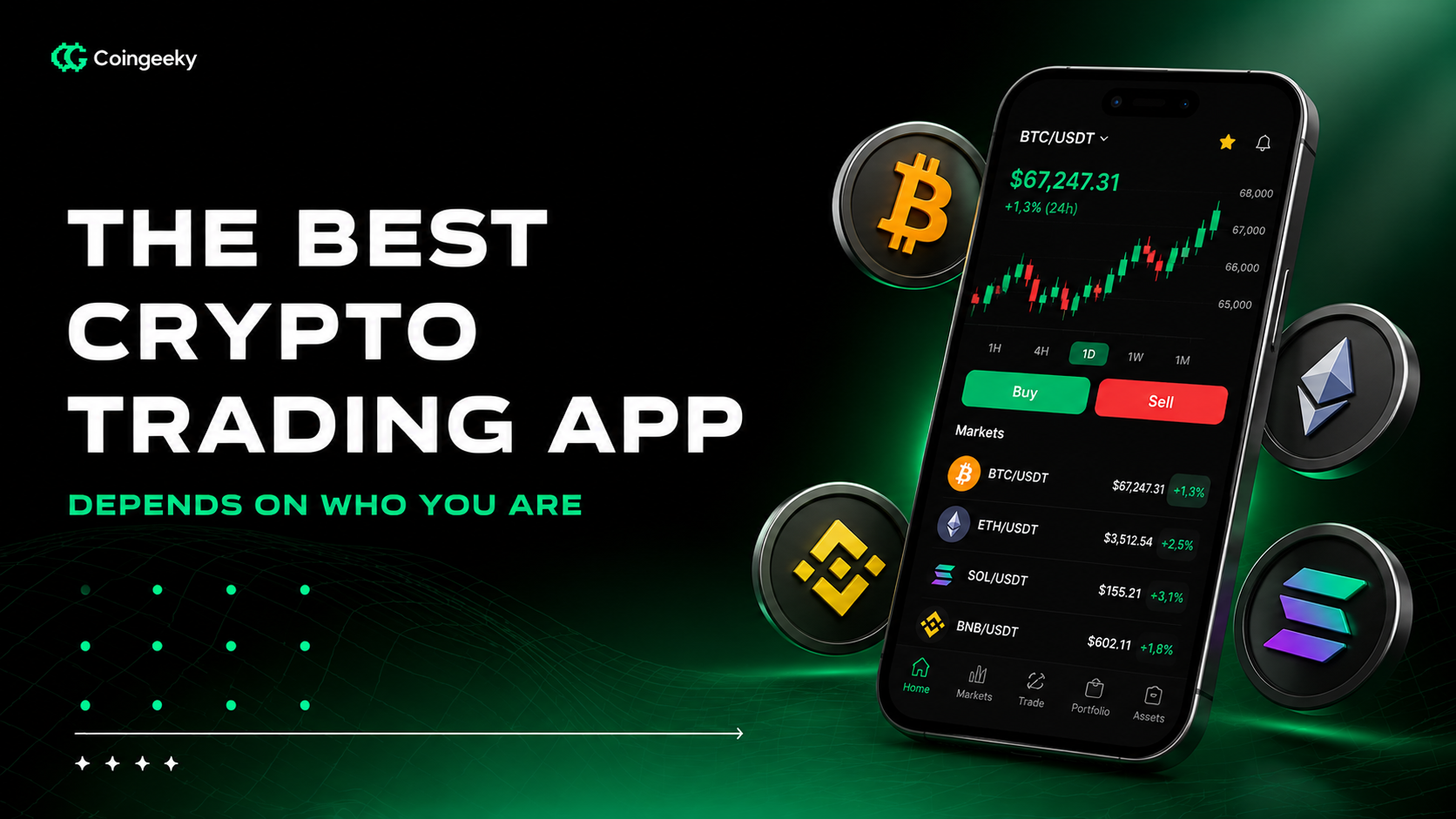

People ask me for the best crypto trading app like there's one right answer. There isn't. The best crypto trading app for my mom, who wants to buy a little Bitcoin and forget about it, is not the app I'd hand to a friend who stares at charts all day. So instead of a fake ranked list with star ratings I made up, let me split this by who you actually are.
I've had accounts on the big three for years. I've fat‑fingered orders, gotten locked out, waited on support, moved coins off in a panic during scary market weeks. This is what I've learned. And I'll say up front, I'm not being paid by any of them, which is exactly why I'm going to point out the annoying parts too. Every app on this list has something about it that has irritated me at some point.
First, a definition that trips people up.
What a trading app actually is
There's a difference between buying crypto and trading it. Buying is tapping a button, paying whatever price the app quotes, and being done. Trading means charts, order books, limit orders, stop losses, the whole thing. Most of the popular apps do both. But the simple buy button usually costs you more, sometimes a lot more, than placing an actual order on the same platform.
So when I say trading app, I mean something that gives you real controls, not just a slick buy screen. Keep that in mind, because it changes which app is right for you.
Best for the total beginner: Coinbase
If you've never touched crypto, start with Coinbase. I know the criticism. The simple buy‑and‑sell fees are on the higher side, and yeah, that stings if you're doing tiny transactions. But for a first‑timer, the app is clean, the flow makes sense, and you're not going to accidentally short Bitcoin with 20x margin because you tapped the wrong thing.
The mobile experience is genuinely good. Signup is quick. It supports the coins most beginners actually want. And here's the trick nobody tells newcomers: once you're comfortable, switch from the simple buy screen to Coinbase's Advanced Trade side. Same account, real order types, much lower fees. That single move saves people real money.
Coinbase is custodial. They hold your coins. That's fine for learning, but read the last section before you get comfortable. One more thing I like for beginners: the interface doesn't bury you in options you don't understand yet. When I first started, that mattered more than I expected. Fewer buttons meant fewer ways to panic and do something dumb during a crash.
Best for the active mobile trader: it's a toss‑up
If you're the type who checks prices at breakfast and places a few orders a week, you want charts that don't fight you and a fee structure that rewards actual trading. Both Kraken and Binance fit here, and honestly it comes down to what you value.
Kraken's app has matured a lot. Charting is solid, the order types are all there, and the platform has a long reputation for taking security seriously. It's been around since the early days and hasn't blown up in the ways some competitors have. That reputation is worth something to me.
Binance, where it's available, gives you a deeper, more powerful trading experience. More markets, more tools, tighter spreads. The catch? It can feel overwhelming, and availability varies by region. In some places you get the full Binance, in others a limited local version, in a few, nothing. Check what's actually offered where you live before you plan around it.
My gut pick for an active trader who wants peace of mind: Kraken. For one who wants maximum firepower and doesn't mind complexity: Binance.
Best for the low‑fee seeker: Binance
This one's simpler. If squeezing fees matters most to you, Binance generally lands at the low end among the majors. That's a real edge if you trade often, because fees quietly eat returns.
I won't quote you exact percentages here, they shift by region, by your trading volume, by whether you hold the platform's own token, and by the day. Anyone throwing a precise number at you without those caveats is guessing. Go look at the live fee schedule for your account. Just know that as a general rule, the simple one‑tap buy on any app is the expensive way, and placing your own orders is the cheaper way.
Coinbase's Advanced Trade also gets you into reasonable fee territory, so it's not like your only low‑fee option is Binance. But pound for pound, Binance is where the fee hawks tend to end up.
Best for the altcoin digger: Binance
Want the long tail of coins, the newer tokens, the stuff that hasn't hit the mainstream apps yet? Binance has the widest selection of the three by a comfortable margin. It lists an enormous number of trading pairs.
Kraken carries a respectable range too, more than enough for most people. Coinbase is the most conservative of the three about what it lists, which is partly a feature. Fewer questionable tokens means fewer ways to lose your shirt on something that turns out to be garbage. So the biggest selection isn't automatically the best thing for you. Depends how deep you're going.
One honest warning. The further you get into obscure altcoins, the more the risk climbs, not because of the app, but because of the coins themselves. The app just gives you access. What you do with it is on you.
Security, quickly, because it's not optional
Turn on two‑factor authentication the moment you sign up. Not SMS if you can avoid it, use an authenticator app. Use a password you don't use anywhere else. This is boring advice and it's the advice that actually keeps people from getting wrecked.
Reputation matters when you're picking. All three apps I've named have been operating for years and are widely used, which is why I'm comfortable naming them. I'd be far more cautious with some random new app promising the moon. Longevity and a clean‑ish track record count.
The thing nobody wants to hear
Here's what I tell everyone, and most people ignore me until something scares them into listening. Don't keep a large balance sitting on any trading app long‑term.
These are custodial apps. When your coins live on Coinbase or Kraken or Binance, the company holds the keys, not you. That's convenient for trading. It's a liability for holding. Exchanges get hacked. Accounts get frozen. Companies have bad quarters. If your life savings in crypto sits on an app, you're trusting that company completely.
So use the app for what it's good at: buying, selling, active trading. Then move anything you want to hold for the long run to a wallet where you control the private keys. That's the difference between custodial, where they hold it, and self‑custody, where you do. Some of these providers even offer a separate self‑custody wallet app you can send to. Use it, or use a hardware wallet.
Do that, and the question of the best crypto trading app gets a lot less stressful. Pick the one that fits how you trade, keep only what you're actively using on it, and sleep fine.
So which one, already
Fine. If you made me choose blind, for a beginner I'd say Coinbase, then graduate to its Advanced Trade. For an active trader who values a security reputation, Kraken. For low fees and the biggest coin selection, Binance, if it's fully available where you are. That's my honest read, not a paid chart. Try one, keep your balance small until you trust it, and go from there.