
Somebody asked me last week which DeFi app they should use, and I realized that's the wrong question. There is no single winner. Asking for the best DeFi platforms is a bit like asking for the best kitchen tool. Depends if you're chopping or boiling.
So instead of ranking apps head to head, I want to sort them by job. What are you actually trying to do? Swap one token for another? Earn interest? Stake ETH without locking it up? Once you know the job, the shortlist gets short fast. I've used most of these with my own money, made a few dumb mistakes along the way, lost a bit to a bad swap once, and I'll flag the traps as we go so you don't repeat them.
One more framing thing. A lot of roundups just list the biggest names and call it a day. That's lazy. The biggest name in a category isn't always the one you should use for your situation, and sometimes the second or third option fits better because it's cheaper on gas, lives on the chain you already use, or does one narrow thing really well. Function first, brand second.
Quick honesty note up front. None of this is financial advice. I'm just a guy who reviews crypto tools. Do your own research, and never put in more than you'd shrug off losing.
How I judge the best DeFi platforms
Before the categories, here's my filter. I care about four things, roughly in this order.
- Is it non‑custodial? Your keys, your coins. If the app holds your funds, it's not really DeFi.
- How long has it run without a major exploit? Time is the honest audit.
- Has the code been reviewed by outside auditors, and is it public?
- What's the TVL doing? Rough trust signal, nothing more.
That last one gets abused. People see a huge total value locked number and assume safety. Wrong. TVL just means a lot of money is parked there. Big pools get drained too. I've watched it happen. So I use it as a soft popularity check, then go read the audit history anyway.
Swaps and decentralized exchanges
This is the front door for most people. You have one token, you want another, and you don't want to hand your coins to an exchange that could freeze your account.
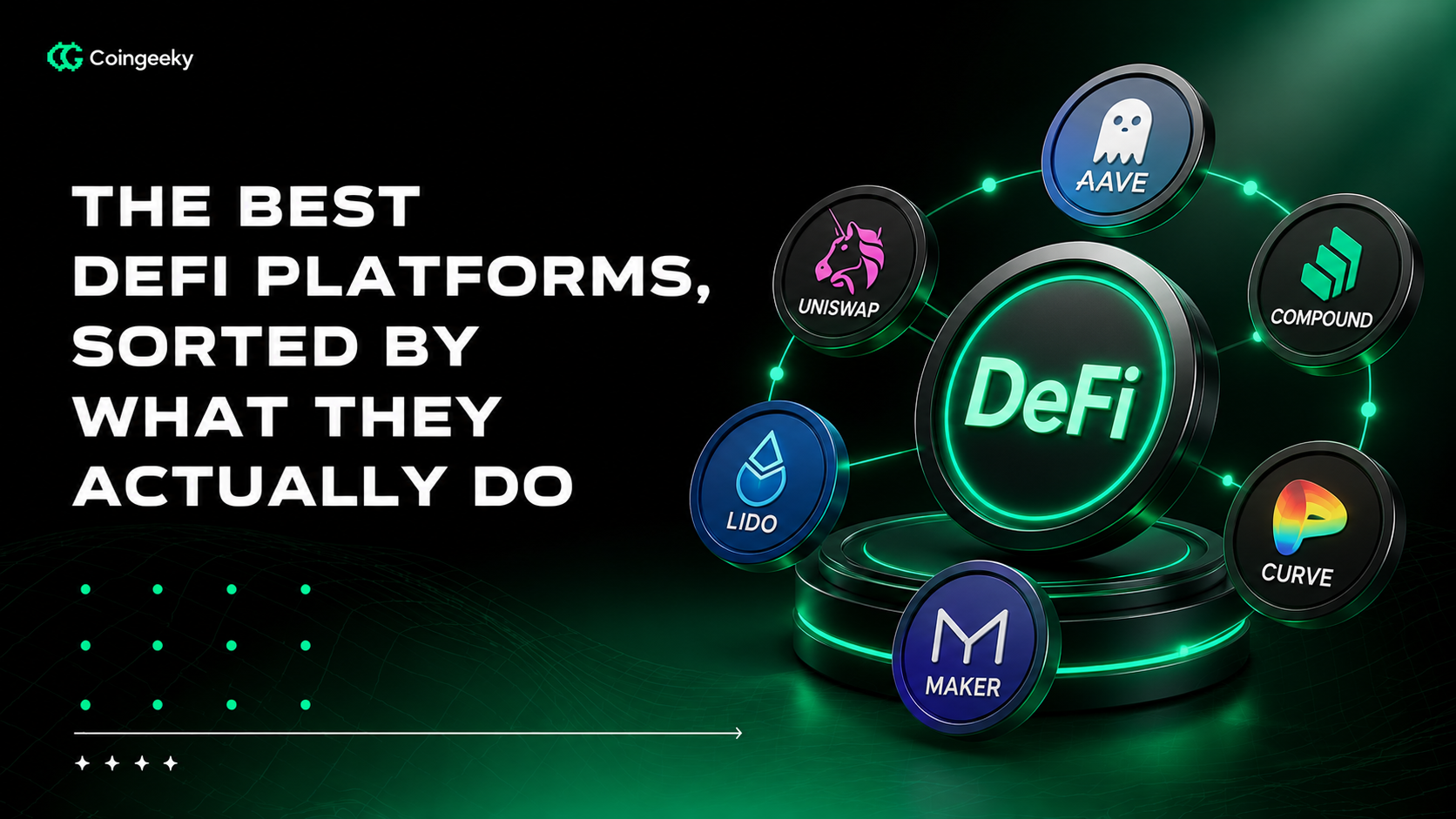
Uniswap is the reference point here. It's been running for years, it's non‑custodial, and the contracts are some of the most battle‑tested in the space. You connect a wallet, pick two tokens, and swap. The catch is slippage on thin pairs and gas fees when the network is busy. For big, liquid tokens it's smooth. For some random microcap, you might get a worse price than you expect, so always check the rate before confirming.
One thing beginners miss. The swap itself is one transaction, but the first time you trade a token you also pay for an approval. Two signatures, two fees. Nobody tells you that until you're staring at your wallet wondering why it asked twice.
Lending and borrowing
Here you either supply assets to earn interest, or post collateral to borrow against it. No credit check, no bank. Just code holding both sides.
Aave is the one I point people to. Long track record, multiple audits, and it spans several chains. You deposit, say, a stablecoin and earn a variable rate that floats with demand. Or you lock up ETH and borrow against it. Rates aren't fixed, so what looks juicy today can drop tomorrow.
The risk that catches folks is liquidation. Borrow too close to your collateral limit, the market dips, and the protocol sells your collateral automatically to stay solvent. It doesn't call you first. There's no grace period, no warning email, no human on the other end. I keep a fat buffer whenever I borrow, way more than the minimum, and I still check the position more often than I'd like to admit. A sudden 20% drop overnight has wrecked plenty of people who thought they had room.
Liquid staking
Staking ETH normally means locking it and running validator software, or trusting someone to. Liquid staking fixes the locked part.
Lido is the big name. You stake ETH, you get a token back that represents your staked position plus rewards, and you can use that token elsewhere in DeFi while your original stake keeps earning. That flexibility is the whole point. The tradeoff is you're trusting Lido's contracts and its validator set, and there's an ongoing debate about how much stake one provider should control. Worth reading up on before you commit a chunk.
Stablecoins and CDPs
Some stablecoins are just IOUs from a company. Others are minted by DeFi itself, and that's the interesting corner.
MakerDAO, now operating under the Sky brand, lets you lock collateral into a vault and mint a stablecoin against it. It's a collateralized debt position, or CDP. You're basically borrowing a dollar‑pegged asset into existence, backed by crypto you posted. Same liquidation warning as lending applies. If your collateral value falls too far, the vault gets liquidated. The upside is you keep exposure to your collateral while getting spendable stablecoins out.
This category rewards patience. Read how the peg holds, what backs it, and what happens in a crash. Not all stablecoins are equal, and the ugly ones tend to look fine right up until they don't.
Aggregators and bridges
Now the part that ties everything together. If you use two or three of the platforms above, you'll quickly hit a problem. Prices and rates differ across venues, and moving assets between chains is a pain. That's what aggregators and bridges solve.
An aggregator doesn't hold a pool of its own. It scans many exchanges and routes your trade through whichever path gives the best rate, sometimes splitting one swap across several. A bridge does the same idea across chains, hunting for the cheapest, fastest route. When it works, you get a better price than you'd find by picking one venue by hand.
The newer wave puts AI on top of this. Blazpay's DeFi app is one example of that approach. It bundles a bridge, a swap, and dollar‑cost averaging, and because it's an aggregator it routes across bridges and swaps to find the best available rate rather than locking you into a single source. I'd treat it the same way I treat any of these: one option among several, useful for the routing, still worth checking that its contracts are audited and non‑custodial before you sign.
The general caution with aggregators is that you're adding one more layer of trust. Your swap now passes through the aggregator's routing contracts as well as the underlying pools. Good ones are audited and hold nothing. Read before you approve.
The risks nobody can route around
Here's the part I won't soften. DeFi has no safety net. No deposit insurance. No support line to reverse a bad transaction.
Smart‑contract hacks are real and they hit big names, not just sketchy forks. Impermanent loss quietly eats liquidity providers when paired token prices diverge. Scams are everywhere, fake tokens, drainer sites, approvals that quietly let a contract empty your wallet later. And once you sign, it's done. That's the deal you accept when you go permissionless.
So my honest take. The best DeFi platforms are the boring, old, heavily‑audited ones for whatever job you're doing, plus a good aggregator to save on rates. Start small. Read the audit. Keep a buffer. And say it with me one more time, this isn't financial advice, and none of it is safe just because it's popular.