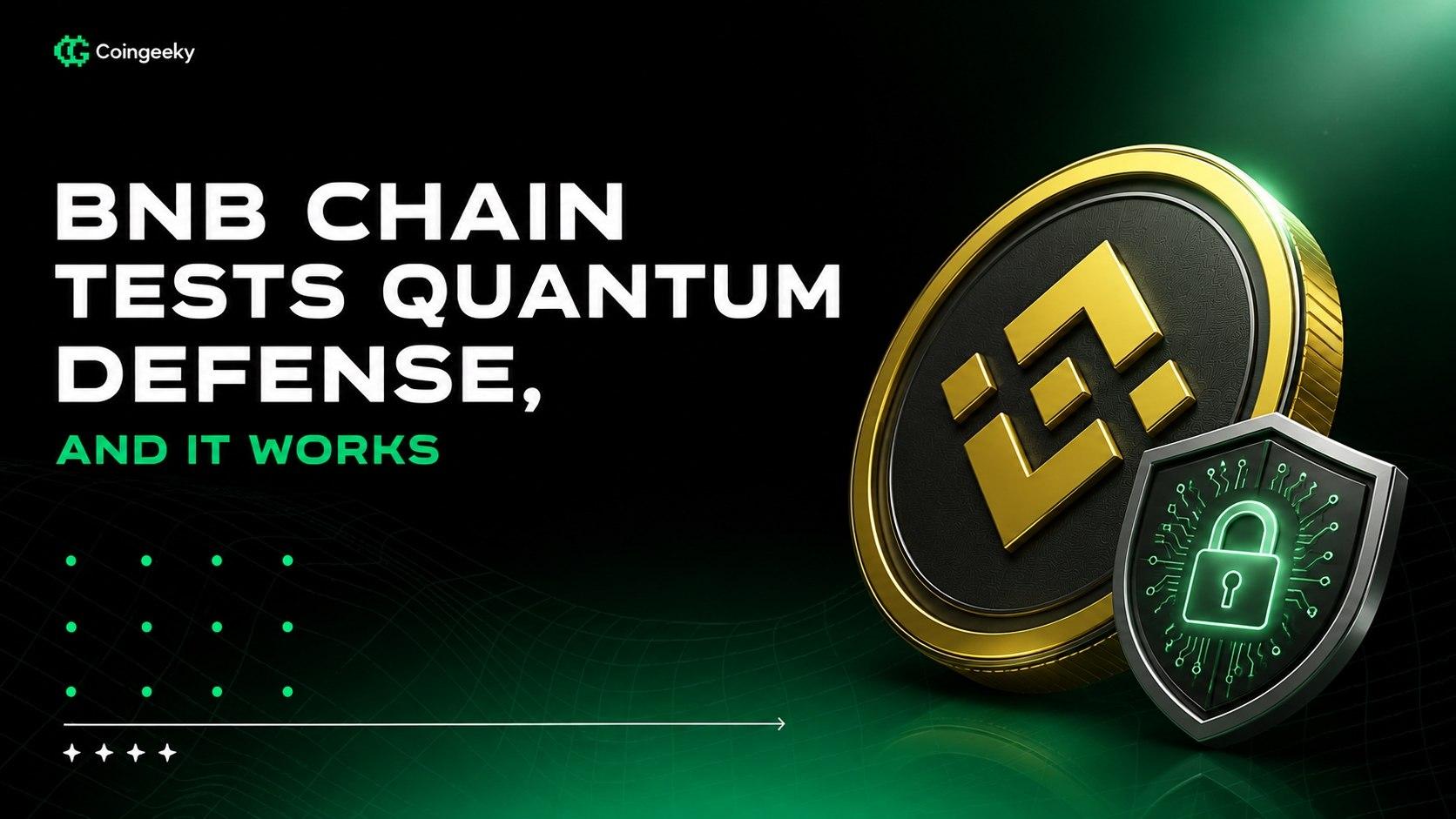

BNB Chain just completed one of the most significant security tests in its history. The team tested new quantum‑safe security on BSC, and the new code passed, but the network ran about 40% slower because the upgrade made every transaction much bigger.
The results were published in a detailed migration report released on May 14, 2026. It's a genuine milestone, but it also comes with a very real problem that still needs solving.
Why This Even Matters
Fortis Most people don't think about quantum computers threatening their crypto. But the risk is real, and the timeline is getting shorter.
The initiative addresses vulnerabilities associated with Shor's algorithm, a quantum computing method that could eventually break the elliptic‑curve cryptography currently securing most blockchain systems.
In March 2026, Google published research showing that practical attacks on the systems should become possible as early as 2029, earlier than previously thought.
The data on the blockchains are permanently stored. If someone stores that data today and decrypts it years later with a quantum computer, the damage is already done. That's why teams like BNB Chain are moving now.
What Changed Under the Hood
BSC upgraded transaction signatures to ML‑DSA‑44, a post‑quantum standard under NIST FIPS 204, and replaced consensus vote aggregation with pqSTARK to strengthen security under quantum threats.
The problem is size. Each transaction's digital signature jumped from 65 bytes to 2,420 bytes under the new system, roughly 35 times larger than before. That bloated size clogs the network during high‑activity periods.
Block sizes swelled from around 130 KB to approximately 2 MB at equivalent load, meaning quantum‑resistant blocks are about 18 times heavier than their predecessors.
The Speed Trade‑Off
This is the core tension BNB Chain is now dealing with. Security is there. Speed isn't.
Cross‑region capacity dropped by about 40% under post‑quantum conditions. Larger blocks also slowed data propagation between regions and reduced finality during peak activity.
There was one bright spot. Validators' voting system used a clever compression trick with pqSTARK that squeezed data at a 43‑to‑1 ratio, keeping consensus fast, and most blocks were confirmed in about two slots.
The report noted that consensus performance stayed stable, which means the heart of the network held up. It's the data pipeline that needs work.
Not Just BSC's Problem
This isn't a BNB Chain‑only challenge. The entire blockchain industry faces this trade‑off.
NEAR Protocol implemented ML‑DSA signatures earlier in May 2026, while TRON announced its own post‑quantum initiative in April. Ethereum has acknowledged the need for post‑quantum upgrades but has not yet released a formal implementation schedule.
What Comes Next
BNB Chain says it must fix the slowdown before turning on the upgrade for real. The test proves the security works. Now the engineering challenge is making it work without cutting network speed in half.
Quantum threats aren't here today, but they're coming. BNB Chain is at least building the answer ahead of time.