
The man behind one of Solana's most legendary tokens did not come to Consensus Miami 2026 to hype memecoins. He came to be honest about them.
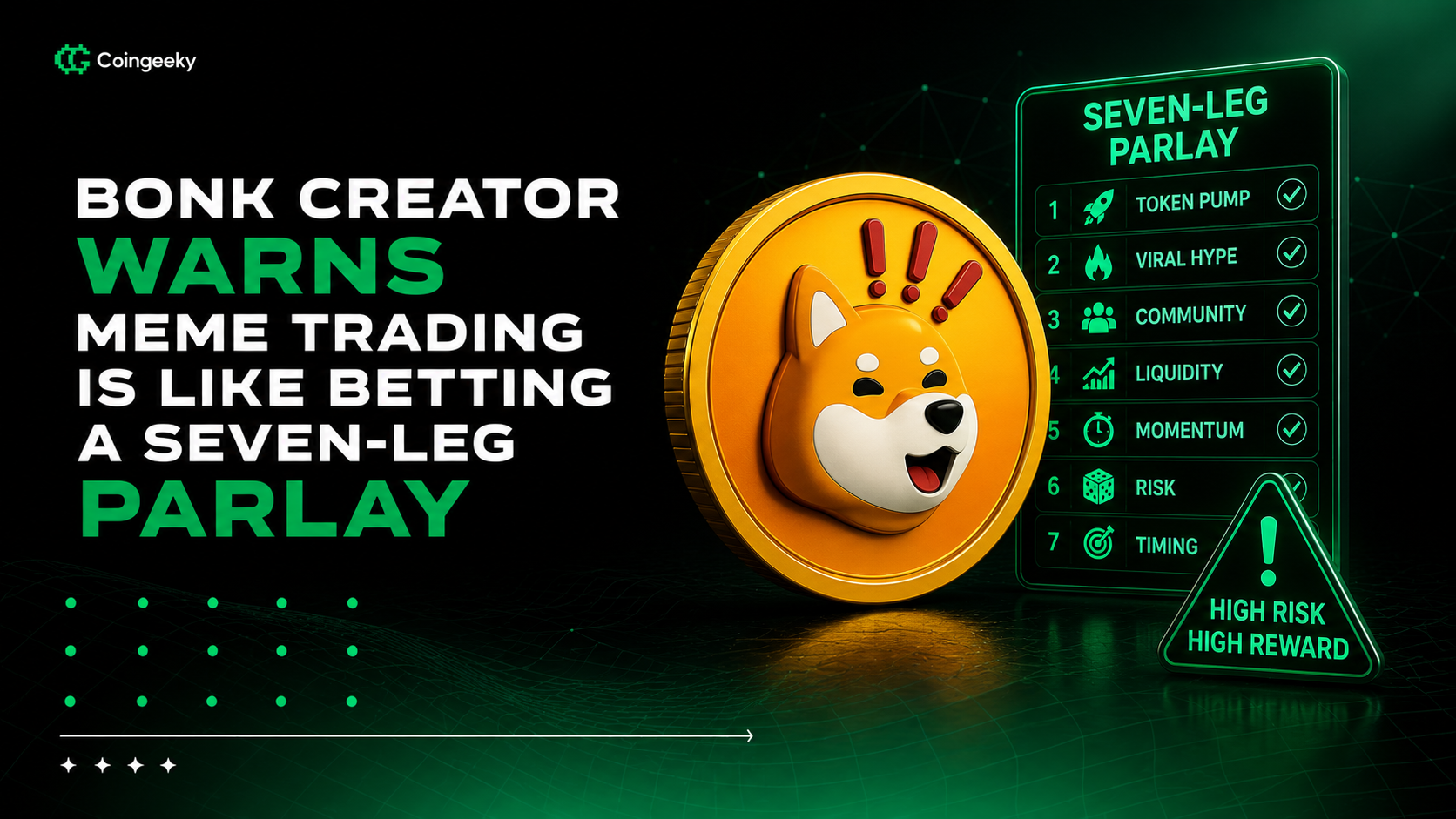
BONK core contributor Nom told the audience on Tuesday that the odds on a seven‑leg parlay and the odds on a fresh memecoin trade are roughly the same. For anyone unfamiliar with sports betting, a seven‑leg parlay means you need seven separate outcomes to all go your way at once. The chances of that happening? Extraordinarily slim.
It was a blunt, refreshing take from someone who has lived the memecoin experience from the very beginning.
Where BONK Came From
BONK launched on Christmas Day 2022, just days after the FTX collapse, with Solana trading below $10 and most builders questioning whether the chain would survive at all.
The token went out as an airdrop to NFT holders, developers, and active wallets with no presale, no venture funding, and no whitepaper. The pitch was distribution rather than tokenomics, built to give Solana developers something to rally around in what felt like a dead market.
It worked. BONK became the unofficial mascot of Solana's comeback, and the community that formed around it has outlasted the hype cycle that launched it.
What BONK Has Built Since Then
Three years on, BONK is no longer just a token. It is a small ecosystem.
The surrounding stack now includes LetsBonk.fun, the Solana memecoin launchpad that flipped rival Pump.fun on monthly volume earlier this year, plus BonkBot, a Telegram‑based trading interface.
That kind of real infrastructure is exactly what separates BONK from the thousands of memecoins that came and went without leaving anything behind.
The TradFi Play: Nasdaq, ETFs, and Treasury Allocations
BONK is also doing something unusual for a memecoin, it is actively pursuing a bridge into traditional finance, and it is making progress.
Nasdaq‑listed Bonk Holdings, trading under the ticker BNKK and rebranded from beverage company Safety Shot in October 2025, holds roughly 2.7% of BONK's circulating supply and is targeting $115 million in token holdings by the end of 2026.
Tuttle Capital has filed a 2x leveraged BONK ETF with the SEC, and TenX Protocols, listed on the TSX Venture Exchange, made a public treasury allocation in BONK as recently as January.
This is not typical memecoin behaviour. It is a deliberate attempt to give the token institutional footing, the kind that survives regulatory cycles rather than being wiped out by them.
Why Skipping Regulation Is the Trap
That is the core of Nom's warning at Consensus. Memecoins that bypass ETF filings and public company structures may feel faster and more exciting, but they are ultimately burning retail traders.
Nom argued that memecoins skipping ETF and public‑company rails end up rinsing retail, meaning ordinary buyers absorb the losses while early insiders exit cleanly.
It is an uncomfortable truth in a space that still romanticises the idea of decentralised, unregulated token launches.
Where the Next Big Communities Might Come From
Nom also shared where he is watching for the next memecoin breakout communities.
He sees future breakout communities emerging from currently dismissed networks, including TON and Telegram‑based projects, spaces that still feel fringe but carry the same energy Solana did in late 2022.
The memecoin market will keep producing winners. But as Nom made clear, the odds of picking the next one correctly are about as good as hitting a seven‑leg parlay. Most people should know that before they place the bet.