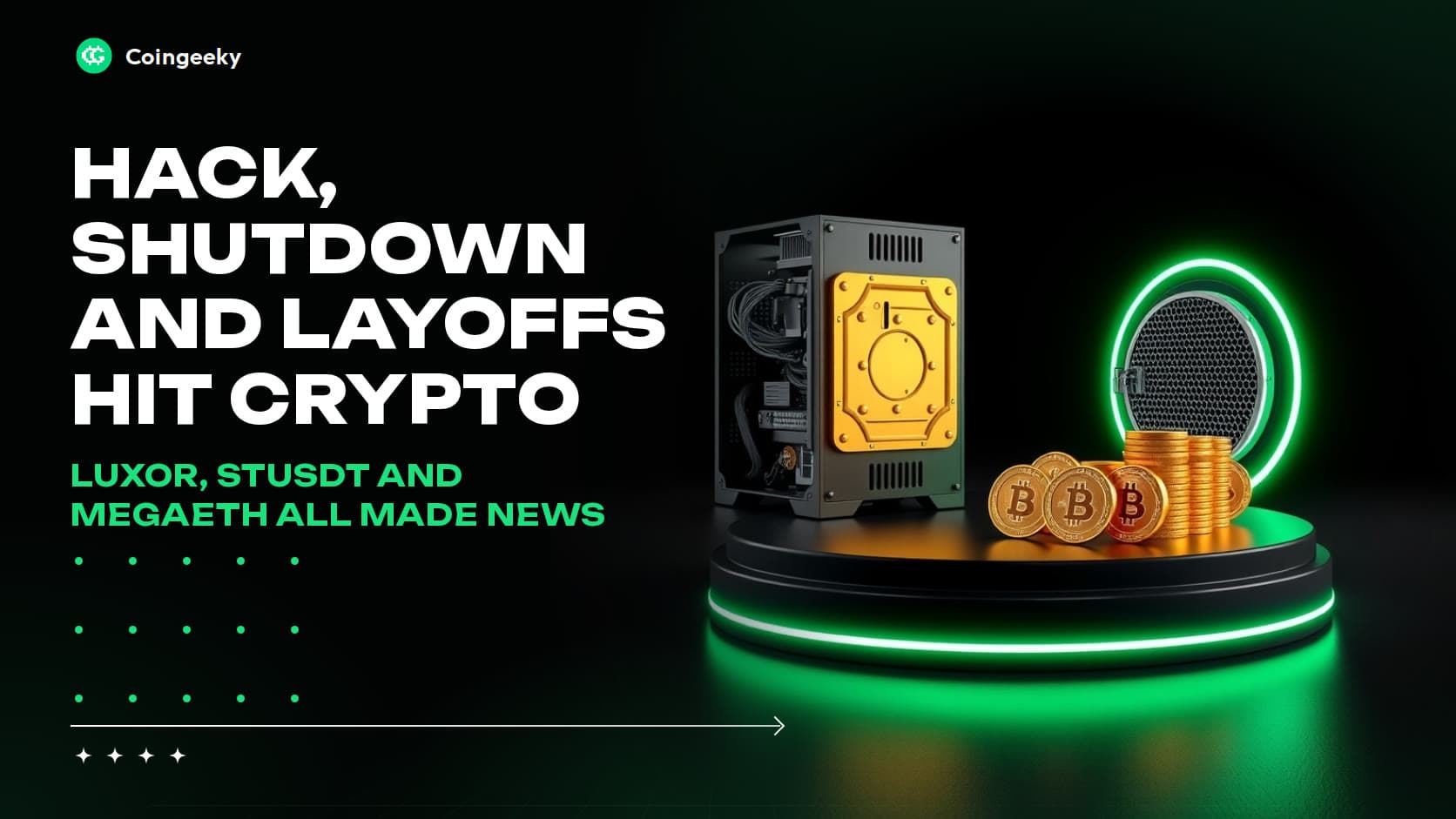

Over the weekend, customers of Bitcoin mining services firm Luxor had their computing power quietly pointed at someone else's mining pool. Attackers got into the company's mining‑management platform, and the hashrate went where they wanted it.
That's the lead item in today's 24 hour crypto recap. Monday's tape was quiet: Bitcoin near $64,278, down about 1.6%. Ether was at $1,802 (off 1.1%), Solana at $71.07 (off 1.6%), and Zcash gave back 4.1% to $881. Monero was the lone green number, up 0.34% to $503.67. The news flow beat the charts.
Luxor Says the Attacks Are Speeding Up
Luxor CEO Nick Hansen addressed the breach in an X post on Sunday. He called it a "sophisticated AI‑enabled vector" but didn't say how AI was actually used. I'd want that answer before taking the label at face value. Without it, nobody outside the company can tell a genuinely new kind of attack from an ordinary intrusion with a fashionable name on it.
Hansen's broader warning was blunt: any substantial business, crypto especially, is being flooded with AI‑assisted attacks, and the pace is rising as models improve and more attackers show up. As Cointelegraph reported, security researchers have already documented AI‑assisted hacking tools spreading.
Why should a holder care? Mining platforms sit between hardware owners and the pools that pay them. Redirect the hashrate and you redirect the revenue, without touching a single coin on‑chain. That kind of theft never shows up in a price chart until it's very large.
stUSDT Closes Up Shop
The second story is a slow fade reaching its end. The real‑world asset protocol stUSDT has started winding down, nearly three years after its total value locked topped out near $2.3 billion.
Interest accrual stopped on Saturday. If you hold stUSDT or the wrapped wstUSDT, the official portal will let you redeem until May 14, 2027. Miss that date and you'll need to go through customer support, which will process claims in monthly batches through August 2027. Anything sitting on an exchange or in a DeFi platform has to be moved to a personal wallet first. The team gave no reason for the shutdown, though it said the underlying assets remain fully backed. Cointelegraph's request for comment went unanswered before publication.
JustLend DAO, meanwhile, is phasing out supply and borrowing on its wstUSDT market.
The protocol launched in July 2023 on Tron, taking USDT deposits and paying yield from real‑world assets such as short‑term government bonds. It later added Ethereum. According to DefiLlama, TVL peaked around November 2023, then bled away: roughly $60 million a year ago, about $8.6 million on Sunday. Despite the name, it has no tie to Tether, which said in September 2023 that stUSDT was an independent project.
My read is that tokenized‑yield products can empty out fast once the novelty fades and better options appear. This one took years rather than days, but the direction never changed after that November 2023 peak.
MegaETH's Parent Cuts a Fifth of Its Staff
The third item came Friday. MEGA, the organization behind the Ethereum layer‑2 network MegaETH, said it had trimmed its workforce by 20% after months of restructuring. Co‑founder Shuyao Kong described "a 20% reduction in our staff" and said the departures touched people working on the blockchain, wallet, ecosystem support and communications. She didn't say how many employees were affected or when the cuts happened.
Kong's message to the people staying was that the founders, the first hires and the central engineering group are all sticking with the project. She did not tie the layoffs to the company's new direction, but it's easy enough to see: MEGA is pushing into AI products built on MegaETH and has committed $30 million to that effort.
The centerpiece is an inference market. In a whitepaper, co‑founders Yilong Li and Lei Yang proposed letting users choose among competing AI service providers, with safeguards aimed at two worries: whether a provider is really running the model it advertises, and what happens to customer data. Kong said a public version is due in December.
What to Watch Next
I'm circling three dates. The stUSDT redemption window closes May 14, 2027, and the TVL figure will show how many holders bother to leave in time. MegaETH's inference market is promised for December, close enough to judge on delivery. And Luxor owes its customers a clearer account of what the AI‑enabled vector actually was. If the company explains it, the rest of the mining industry gets something to defend against. If it doesn't, the warning stays vague, and I don't know what anyone does with a vague warning.