
A friend messaged me last year asking if a new exchange was legit. It was offering something like double‑digit returns just for parking your coins there, and the app looked slick. I told her to run. She didn't lose money, thankfully, but plenty of people who ignored that gut feeling did. That conversation is basically why I keep coming back to the same question when someone asks me about the safest crypto exchanges: not which one has the lowest fees or the prettiest interface, but which one is least likely to lose your money.
Those are different questions. And the second one matters way more.
So let me walk through how I actually judge whether a platform is safe. Not marketing claims. The stuff underneath.
Regulation is boring and it matters most
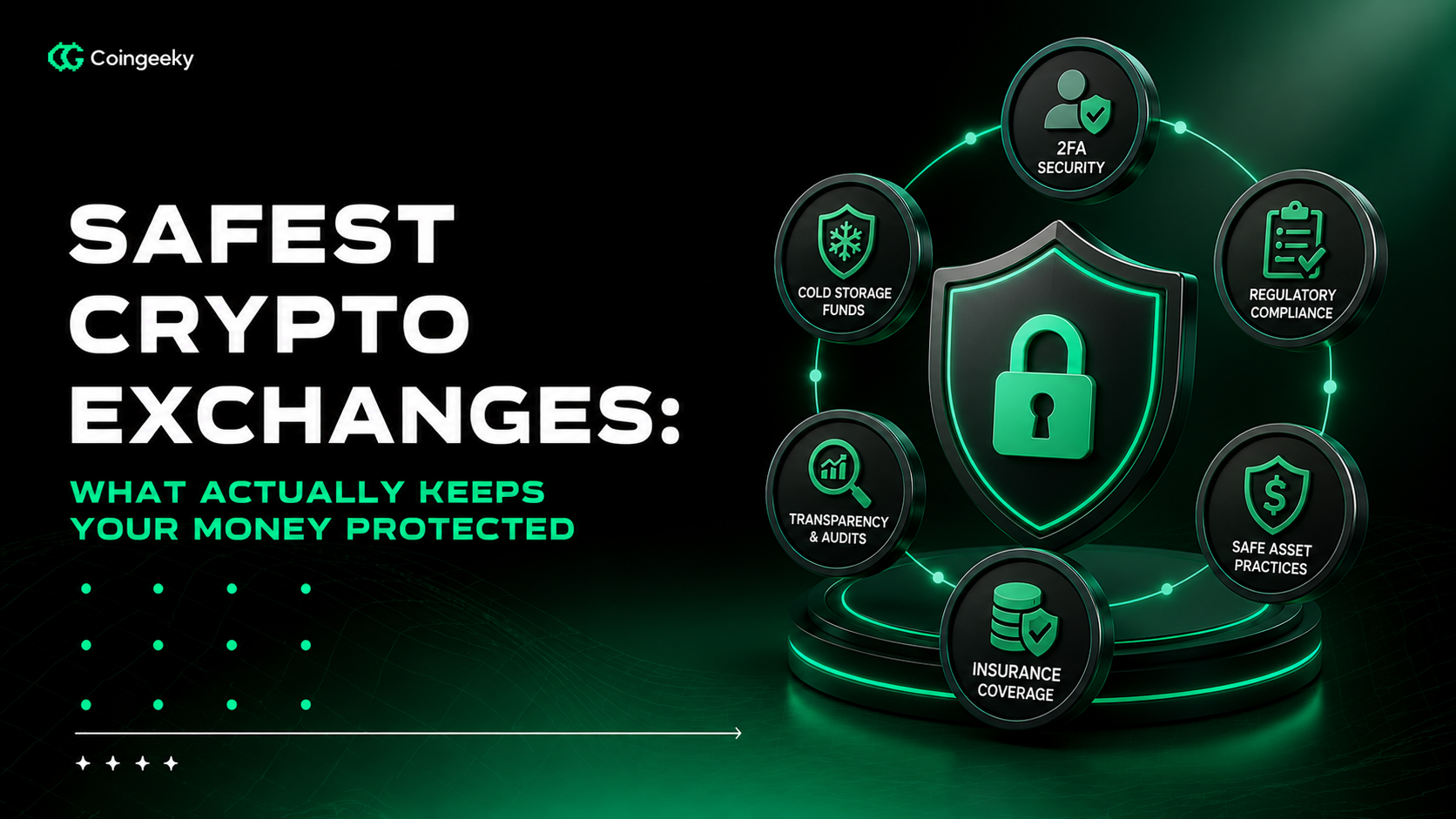
The first thing I look at is whether an exchange is regulated somewhere that actually enforces rules. A license in a serious jurisdiction, the US, the EU, the UK, means the company answers to somebody. It has to hold reserves a certain way, file paperwork, submit to audits, and face real consequences if it lies. That oversight isn't glamorous. It's also the single best predictor I've found of whether a platform will still exist and still have your money in three years.
Compare that to an exchange incorporated in some jurisdiction nobody can pronounce, with no regulator watching. When something goes wrong there, and it eventually does, who do you call? Nobody. That's the point of setting up shop that way.
People sometimes push back on this. They'll say regulation is slow, or that the whole appeal of crypto was escaping middlemen and gatekeepers. I get it, I felt that way too when I started. But there's a difference between the technology being permissionless and handing your life savings to a nameless company that answers to no one. One of those is freedom. The other is just risk dressed up as ideology.
Coinbase is the clearest example of the opposite approach. It's a publicly listed US company, which means it files financial statements the whole world can read. You can literally check how the business is doing. Kraken, while private, has built a similar reputation for playing by the rules and being straight with customers. Neither is perfect. But that level of daylight is exactly what you want.
Proof of reserves and plain transparency
After FTX blew up, proof of reserves became a buzzword. The idea is simple enough: an exchange shows cryptographic evidence that it actually holds the customer funds it claims to. Done well, it's genuinely useful. Done as a marketing stunt, it proves almost nothing, because it can show assets without showing liabilities.
So I don't treat proof of reserves as a magic checkmark. I treat it as one signal among several. What I really want is an exchange that's willing to be transparent across the board: where funds are held, how they're secured, who runs the place, and what happened the last time something broke. Silence on any of those is telling.
Security track record, hacks, and how they responded
Here's a thing people get wrong. A hack in an exchange's history isn't automatically disqualifying. What matters is how they handled it. Did they cover customer losses? Did they patch the hole and explain what happened? Or did they go quiet and let users eat the damage?
An exchange that got hit, made customers whole, and hardened its systems is often safer afterward than one that's never been tested at all. Scars can mean they learned something. What I won't forgive is an outfit that suffered a breach and just shrugged.
Kraken, for instance, has a long‑standing reputation for taking security seriously and has run public exercises to prove its reserves. That kind of behavior tells me the people running it think about this stuff the way I'd want them to.
Where the coins actually sit
Cold storage is the practice of keeping the bulk of customer crypto offline, disconnected from the internet, so hackers can't reach it remotely. The safest exchanges keep only a small slice in hot wallets for day‑to‑day withdrawals and stash the rest cold. If a platform can't or won't tell you how it stores funds, that's a gap.
Insurance is another layer, though a shaky one. Some exchanges carry policies covering certain losses. It's worth having. Just don't assume it blankets everything, because it usually doesn't, and the fine print matters a lot.
The account protections you control
Some safety is on you. Two‑factor authentication should be mandatory, and I mean app‑based or a hardware key, not SMS, which can be hijacked. Good exchanges also let you set withdrawal address whitelists and add delays on new withdrawal destinations, so a thief who gets into your account still can't drain it instantly.
If a platform doesn't even offer solid 2FA, I'm out. That's a basic bar, and failing it tells me they don't take user security seriously.
Small habits help too. Use a unique password you don't reuse anywhere else. Watch out for phishing emails that mimic your exchange and try to rush you into clicking. And never approve a login or withdrawal you didn't start. A lot of losses I've read about weren't the exchange getting hacked at all. They were the user getting tricked into opening the door.
Even the safest crypto exchanges can fail
I want to be blunt here because a lot of guides aren't. No exchange is 100% safe. None.
Mt. Gox was once the biggest Bitcoin exchange on earth. It collapsed and took hundreds of thousands of coins with it. FTX, in 2022, was a household name with celebrity endorsements and a founder the press adored, right up until it turned out customer funds had been misused and the whole thing imploded. Big and famous is not the same as safe. It never was.
The lesson I took from watching those failures is the most important one in this whole piece. An exchange is a place to trade. It is not a bank, and it is not a vault. When your coins sit on an exchange, that company holds the private keys, which means they, not you, actually control the funds. If they fail, get hacked, or freeze withdrawals, your access can vanish overnight.
So move your holdings off
For anything you're planning to hold for real, get it into self‑custody. A hardware wallet where you, and only you, hold the keys. Yes, that puts responsibility on you to protect your seed phrase. But it removes the single biggest risk in crypto, which is trusting someone else with your money and hoping they don't lose it.
Trade on the exchange. Store off it. That's the whole philosophy, and it's saved people far more than any five‑star review ever did.
Red flags that should make you leave
Quick gut‑check list. If an exchange shows any of these, I don't care how good the app looks:
- No regulation or licensing anywhere you can verify.
- An anonymous team, or founders whose names and faces you can't find.
- Returns or yields that sound too good to be true, because they are.
- Any friction withdrawing your own funds, delays, sudden limits, or excuses.
- Pressure tactics, fake urgency, or promises of guaranteed profit.
Of those, withdrawal problems are the one I'd never ignore. When people start reporting they can't get their money out, that's usually the beginning of the end. By the time it's confirmed, the money's often already gone.
None of this means you should be paranoid about the whole space. Reputable, transparent, regulated exchanges exist and they work fine for what they're for. I use them. I just don't confuse using one for trading with trusting one to be my savings account. Pick a platform that's accountable, turn on every protection it offers, and then move anything meaningful somewhere only you can touch. Do that, and you've handled the part of crypto safety that's actually in your control.