
# title: Can You Bet on the World Cup With Crypto? What's Legal, What's Not
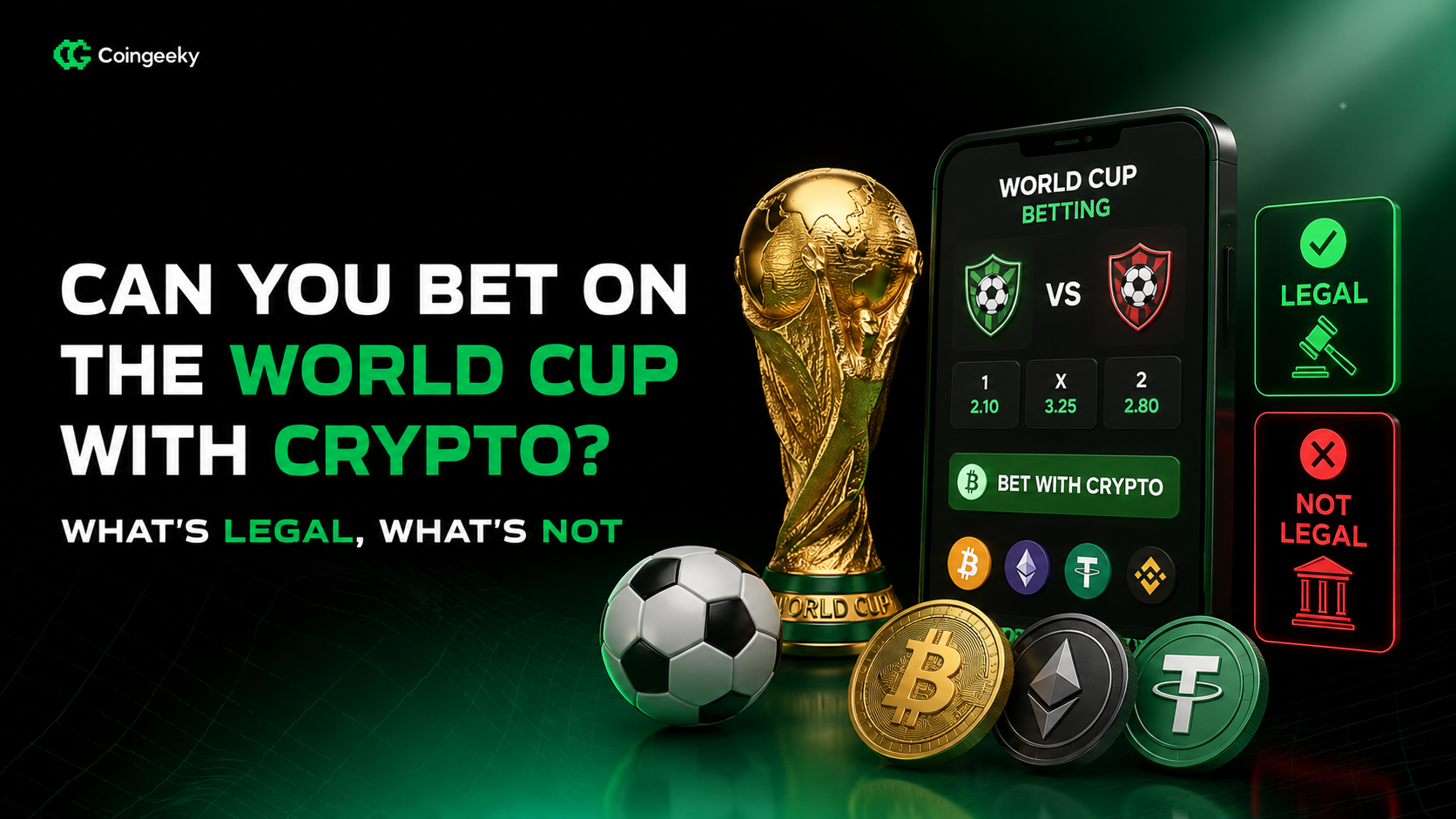
The World Cup is down to eight teams. Quarterfinals start Thursday. France versus Morocco, Spain versus Belgium, Norway against England, Argentina against Switzerland. And if youve scrolled through crypto Twitter this past month, you have seen the Polymarket screenshots. People posting their positions on match winners, on exact scorelines, on who lifts the trophy on July 19. The volume has been staggering.
But a question I keep getting from readers is a simple one. Can you actually do this legally? The answer, as with almost everything in crypto, is it depends.
I spent a few days digging into the regulatory landscape around crypto World Cup betting. Here is what I found.
The three platforms you need to know
There are three main platforms handling crypto World Cup betting right now, and they operate under very different legal frameworks.
Polymarket is the biggest by volume. The World Cup winner market alone crossed $2.34 billion in lifetime trading. Its a decentralized prediction market built on Polygon. You deposit USDC, buy shares in outcomes, and the smart contract pays out if you are right. Polymarket settled with the CFTC in 2022 for $1.4 million over allegations that it offered event contracts without registration. As part of that settlement, the platform restricted US user access. You can still reach it with a VPN if you are determined, but that is not exactly legal clarity. The platform itself blocks US IPs and asks about your jurisdiction during onboarding.
Kalshi is the regulated alternative. It is a CFTC registered exchange that offers event contracts on everything from interest rates to World Cup outcomes. Kalshi partnered with FIFA linked ADI Predictstreet for this tournament, giving it an official seal that Polymarket does not have. Kalshi only accepts USD, not crypto, but it is fully legal for US users in most states. The trade off is that Kalshi does not have the same liquidity or market depth as Polymarket. The spreads are wider and the volume is lower.
Whale.io is a newer entrant that launched World Cup prediction markets in June. It leans into the crypto native experience more than Kalshi but claims compliance with relevant regulations. I have not seen major enforcement actions against it, but its regulatory status is less clear than Kalshi's and less tested than Polymarket's.
The legal gray zones
Here is where it gets messy. Prediction markets sit in a weird spot between gambling and financial markets. The CFTC treats them as event contracts, which fall under commodities law rather than gambling law. That means they are regulated federally, not by state gaming commissions. The advantage is that a platform like Kalshi can operate legally in states where sports betting is illegal, because it is not technically sports betting.
But the states are fighting back. Tennessee, New Jersey, and several others have sent cease and desist letters to Polymarket and similar platforms, arguing that prediction markets constitute unlicensed gambling under state law. Those challenges are ongoing. For now, Kalshi operates in most states because it has the CFTC registration to point to. Polymarket operates in a gray area. Whale.io is somewhere in between.
The honest answer is that if you are in the US and you use Polymarket with a VPN, you are betting in a space where the legal status is contested but enforcement has been limited. That could change at any time. The CFTC under the current administration has been active on crypto enforcement, and prediction markets are on their radar.
What about fan tokens
Chiliz and its Socios platform have been one of the clearest beneficiaries of World Cup crypto interest. Chiliz is up 28 percent since the tournament started. Several national teams and clubs have fan tokens that let holders vote on minor club decisions and access exclusive content. The pitch from Socios is that these are not gambling. You are buying a token that represents your fandom, not placing a bet on an outcome.
The line gets blurry though. Some fan tokens have moved significantly based on match results. A team winning a knockout game can send its fan token up 15 percent in an hour. If that is not a bet on an outcome, it sure walks like one. The platforms frame it as market dynamics on a utility token. Regulators may see it differently.
I personally think fan tokens are a fascinating experiment but a risky investment. The volume is thin. The utility is limited. The price action is almost entirely narrative driven. Treating them as a fun way to engage with a team you support is fine. Treating them as an investment strategy is probably not.
The practical reality
Here is what I would tell a friend who asked whether they can use crypto to bet on the World Cup.
If you are outside the US, Polymarket is the best option. The UX is smooth, the liquidity is deep, and the regulatory picture in most of Europe and Asia is clearer. The EU's Markets in Crypto Assets framework, MiCA, provides a regulatory structure that covers prediction market platforms operating in member states. The UK Gambling Commission has its own framework that some platforms comply with.
If you are in the US and want to stay clearly legal, use Kalshi. Yes, it uses dollars and not crypto, but it is regulated and the funds are protected. The trade off in spread and volume is worth the legal peace of mind.
If you want to bet with crypto specifically and you are in the US, the honest answer is that you are in a gray area. Polymarket is accessible but not fully legal. Many thousands of Americans use it anyway. That does not mean it is a good idea. It means the enforcement risk is currently low for individual users. Platforms face the enforcement heat, not bettors. But that could shift.
A few practical tips
Whichever route you take, a few rules apply. Only put in what you can lose. That sounds like generic advice but it matters more with prediction markets because the all or nothing structure means you can lose your entire stake. There are no partial payouts, no cash out options. You are either right or you are not.
Keep records. If you win, the IRS considers prediction market income taxable. The platforms issue tax forms for significant winners, but smaller amounts still need to be reported. A lot of people overlook this and it comes up on audit.
And watch out for scams. The World Cup is a phishing magnet. Fake Polymarket clones, fake fan token presales, impersonators in DMs. If someone sends you a link to a "special prediction market" with guaranteed returns, it is a scam. The real Polymarket is at polymarket.com. That is it.
Bottom line
Crypto World Cup betting is happening at a scale we have never seen before. $2.34 billion on Polymarket alone, with weeks left in the tournament. The legal framework is catching up, but for now the landscape is fragmented. Legal in some places, gray in others, outright restricted in a few.
My take is that we are watching the early innings of something much bigger. Four years from now, the next World Cup will have even more volume, better regulation, and smoother UX. The question is whether the existing sportsbooks adapt or get left behind.