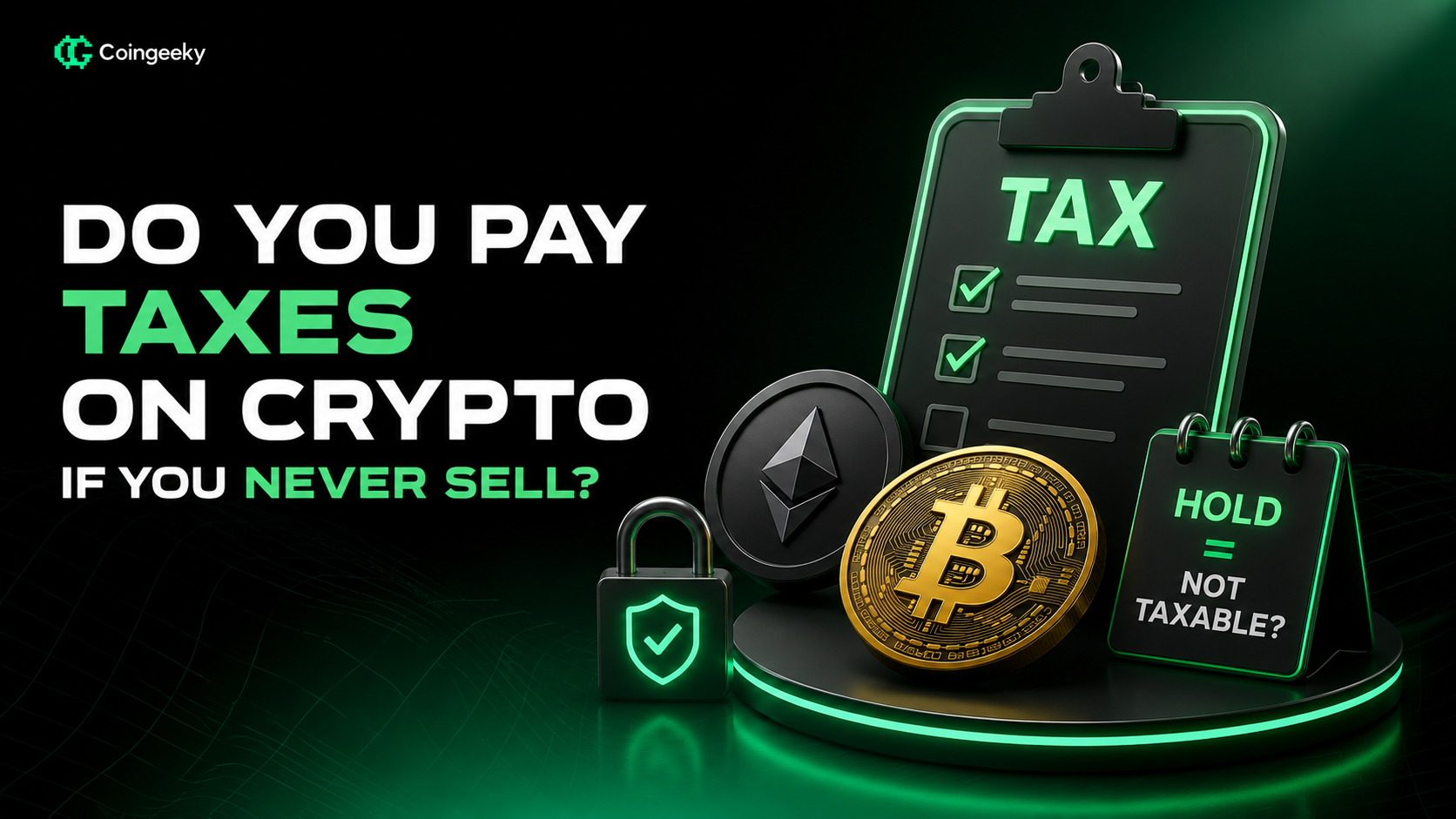

Short answer first. If you bought crypto and just let it sit, most tax offices don't want anything from you yet. Not the IRS, not HMRC, not the tax authorities across most of the EU. Holding isn't a taxable event.
But here's where people get burned. They assume nothing is taxable until they hit the sell button and move real money to their bank. That's wrong, and it's an expensive kind of wrong. You can rack up a genuine tax bill without ever seeing a single dollar or euro land in your checking account.
I've watched friends learn this the hard way in April. Let me walk through what actually triggers tax and what doesn't, so you don't get a surprise letter.
Just holding is fine (almost everywhere)
When you buy crypto and keep it, any increase in its price is what's called an unrealized gain. It's profit on paper. You haven't locked it in. And in the US, UK, and most of the EU, paper profit isn't taxed.
Think of it like owning a house that's gone up in value. Nobody taxes you every year just because Zillow says it's worth more. The tax comes when you sell. Crypto works the same way in most places.
So if you bought one Bitcoin in 2023 and it's tripled by July 2026, and you've done absolutely nothing with it, you owe nothing on that gain. It's yours, untaxed, until you act.
One caveat. A handful of countries run wealth taxes that assess what you own each year, and some of those sweep in crypto holdings. Spain and Norway are examples. If you live somewhere with a wealth tax, don't assume holding is free. Everyone else, breathe easy.
The stuff that IS taxable, even without cashing out
Here's the part that trips people up. Four common activities can create a tax event even though you never withdrew to fiat. None of them require touching your bank.
Staking rewards and interest
Lock up your ETH or SOL to earn staking rewards? Those new coins are usually treated as income the day they land in your wallet. The value on that date is what gets taxed as income, at your normal income rate.
It gets sharper. If you later sell those reward coins for more than they were worth when you got them, that extra gain is taxed again as a capital gain. So staking can hit you twice. Once when you earn, once when you sell. The same logic applies to crypto lending and most yield products.
Airdrops
Free tokens dropped into your wallet aren't really free once tax season comes. In the US and UK, airdrops are generally taxed as income at their market value when you receive them (or when you gain control of them). Didn't ask for the tokens? Doesn't matter. If they've got value and you can move them, that value can count as income.
Crypto‑to‑crypto swaps
This is the big one people miss. Trading Bitcoin for Ethereum feels like moving money around inside your own crypto world. No cash came out. But tax offices see it differently.
A swap is a disposal. The moment you trade BTC for ETH, it's treated as if you sold the BTC at its market value that day. If your BTC was up since you bought it, that gain is realized and taxable, right then, no bank involved.
Do a lot of trades? Each swap is its own little taxable moment. This is exactly why a busy trader can owe thousands while their exchange balance never once became actual dollars. If your trading history is a mess, run it through a crypto tax calculator before you file. Doing it by hand across hundreds of trades is a nightmare.
Spending your crypto
Buy a laptop with Bitcoin? Grab a coffee with USDC? That's a disposal too. Spending crypto is treated as selling it at market value, so any gain since you acquired those coins can be taxed.
Stablecoins are usually a non‑issue here because their value barely moves, so there's little or no gain. But paying for something with an appreciated coin is a taxable disposal, plain and simple.
A simple way to remember it
Ask one question. Did I dispose of the asset, or receive new value?
Holding is neither. You still own the same thing and nothing new arrived. That's why it's not taxed.
The four triggers all involve one of those two things. Swaps and spending are disposals. Staking rewards and airdrops are new value received. Cash never has to enter the picture.
- Bought and held only? No tax event.
- Earned staking rewards or an airdrop? Likely income tax.
- Swapped one coin for another? Likely capital gains tax.
- Spent crypto on something? Likely capital gains tax.
Keep records now, thank yourself later
The single best habit is boring. Track everything. The date you got each coin, what you paid, and what it was worth on the day of every reward, swap, or purchase. That cost basis is what your gain gets measured against.
Most people skip this and then spend a frantic weekend in March trying to reconstruct two years of activity from exchange emails. Don't be that person. Exchanges close, data disappears, and the gaps always seem to land in the tax office's favor.
Also worth saying: watch who you're dealing with. Some of the ugliest tax situations come from platforms that promise wild yields and then vanish, leaving you with taxable rewards on paper and no coins in hand. Our guide on spotting crypto scams covers the warning signs. A collapsed platform doesn't erase the income you already reported.
So, do you pay tax if you never sell?
If "never sell" truly means you bought, held, and did nothing else, then no, you generally don't owe anything until you act. That's the honest answer for the US, UK, and most of the EU.
But most of us don't just hold. We stake. We chase airdrops. We swap coins when the market moves. We spend a little here and there. Every one of those can create a tax event with zero fiat involved.
The rule that keeps you out of trouble is simple. Holding is quiet. Everything else, keep a receipt. And because these rules shift and vary by country, treat this as a starting point, not gospel. For anything with real money on the line, talk to a tax pro who knows your local rules. This isn't legal or tax advice, just a map of where the tripwires tend to be.