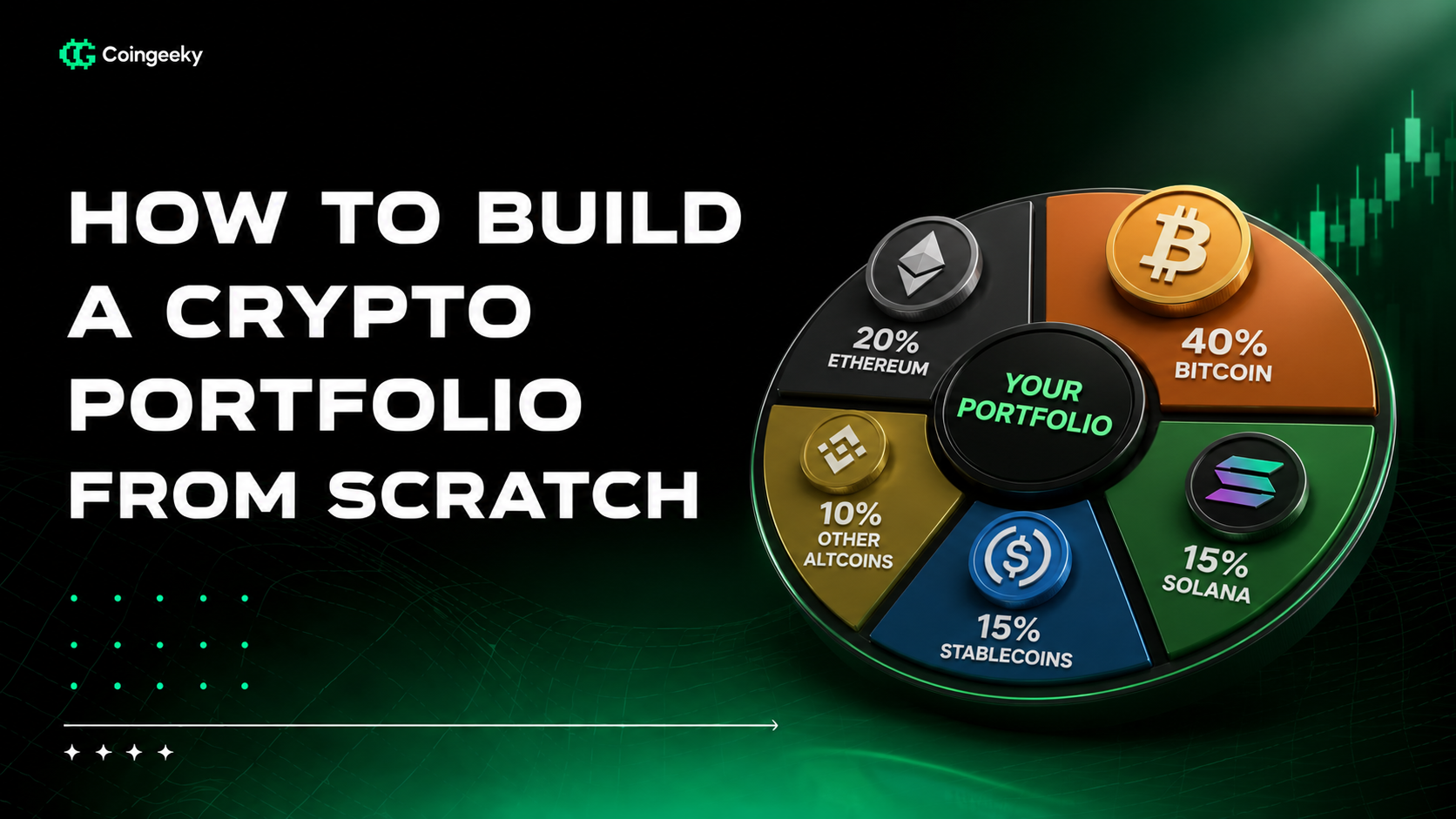

Most first portfolios fail for the same dull reason. Too many coins, no plan, all bought on a feeling. So let me hand you the version I wish someone had given me years ago, the one that fits on the back of a napkin and still holds up.
It starts with two words: core and satellite.
Core and satellite
The core is the steady part of your portfolio, the assets that have already been through a full market cycle and are still standing. For most people that means Bitcoin and Ethereum carrying the bulk of the weight. The satellite is everything smaller and riskier, the higher‑conviction bets you're making on purpose. The core should be the clear majority. If your satellite ends up bigger than your core, you don't really have a portfolio, you have a casino night with extra steps.
That single split does more work than any individual pick. It decides how much your whole stack swings, and it keeps one bad bet from taking the rest down with it.
How many coins should you actually own?
Fewer than you think. Five to eight is plenty for most people starting out. Once you're holding fifteen tokens you've never properly researched, you're not diversified, you're just confused and spread thin. Every coin you add is another project you're supposed to understand, another team to trust, another thing to watch when the market gets loud. Attention is a real, finite cost, and most people badly underestimate it.
A split I've watched work for beginners: roughly sixty to seventy percent in Bitcoin and Ethereum, and the rest spread across a small handful of things you can explain to a friend in one plain sentence. If you can't say in a breath why you own something, that hesitation is your answer.
Buy slowly, on purpose
Don't deploy everything in a single excited afternoon. Spread your buys over weeks, or months if the amount is meaningful. Dollar‑cost averaging isn't thrilling, but it quietly removes the single worst variable in investing, which is your own timing. Nobody reliably catches the bottom. The people who claim they did got lucky once and tend to go quiet the next time the chance comes around.
Spreading your entries also does something subtler: it keeps you calm. When you've only deployed part of your money, a dip feels like an opportunity to buy more rather than a disaster unfolding in your account. Same market, completely different emotional experience, and your emotions are usually the thing that wrecks the plan.
Rebalance, but don't fuss
Here's where discipline quietly earns its money. When one of your satellite bets rips and suddenly it's forty percent of your portfolio, trim it back toward your target weight. It feels wrong to sell something that's winning. Do it anyway. Selling a little of what's run up and topping up the core is how you lock in gains without trying to perfectly call a top, which is a game almost nobody wins twice.
Quarterly is plenty for this. Maybe monthly if you enjoy it. Checking every day just feeds the anxiety and tempts you into fiddling, and fiddling is where good plans go to die. The portfolio doesn't need your constant attention. It needs your patience.
A worked shape
To make it concrete, imagine you've got a modest amount to start. You might put the large majority into Bitcoin and Ethereum, split between them, then take the remaining slice and spread it across two or three projects you actually believe in and understand. You buy that whole allocation in over six or eight weeks rather than in one click. Then you mostly leave it alone, glancing at it every few months to trim anything that's grown wildly out of proportion. That's it. That's the entire system.
The honest part
None of this will make for a thrilling group chat. There's no leverage, no overnight ten‑times, no story about the coin you aped into at 3am. But thrilling is usually what losing money feels like on the way down. Boring, in investing, tends to be a compliment. Build the dull, sturdy version first. You can always get fancier later, once the foundation has proven it can hold.