
It started at 31 cents. Today it powers a trillion‑dollar ecosystem. Here's everything you need to know about Ethereum right now.
Where Does ETH Stand Today?
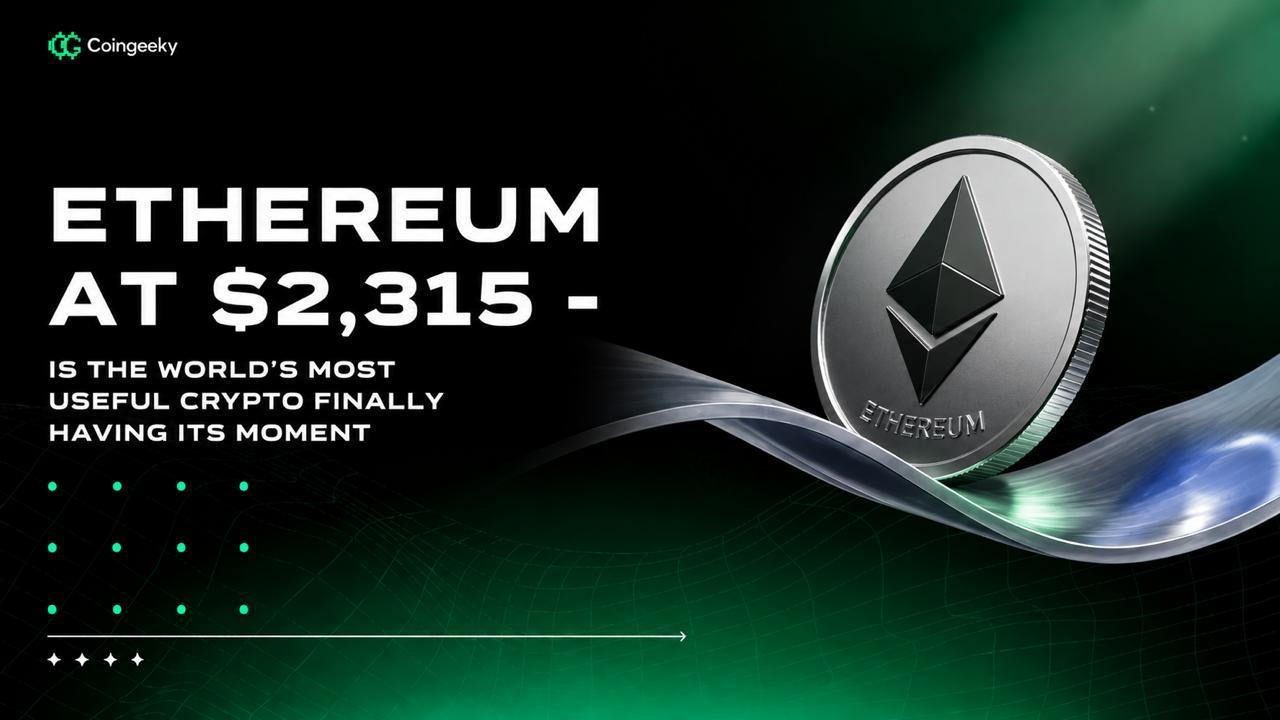
Ethereum is trading at approximately $2,315 as of April 27, 2026 — a modest dip from yesterday's price but a striking 29% rise compared to this time last year, when it sat near $1,791. Zoom out a month and the picture gets even more interesting: ETH has climbed over 12% since late March, suggesting a quiet but meaningful recovery is underway.
For context, the broader crypto market has Bitcoin dominating at a market cap of around $1.33 trillion. Ethereum, sitting at roughly $233 billion, is a distant second — but that gap tells only part of the story. What Ethereum lacks in market cap dominance, it more than makes up for in utility.
Not Just a Coin — A Computing Platform
Here's what most casual observers miss about Ethereum: it was never designed to just be digital money. Unlike Bitcoin, which functions primarily as a store of value — often described as "digital gold" — Ethereum is more aptly compared to "digital oil." It powers things.
Developers build decentralised applications directly on Ethereum's blockchain — borrowing, lending, trading, and investing — all without the involvement of any bank, company, or government. Every transaction on these apps requires ETH, which is where the token's intrinsic demand comes from. More usage equals more demand equals upward price pressure. It's a simple but powerful dynamic.
A History of Wild Swings
Ethereum's story is not for the faint‑hearted. Its ICO launched back in 2014 at just $0.31 per token. Since then, it has delivered gains in excess of 60,000% — and briefly approached $5,000 in August 2025, its all‑time high.
But the journey has been turbulent. Early 2026 saw a sharp correction, driven by recession concerns and high‑profile selling by Ethereum co‑founder Vitalik Buterin. The lesson? Ethereum can make you or break you in short order. It rewards patience and punishes panic.
What Could Move the Price From Here?
Several forces are shaping ETH's near‑term and long‑term trajectory. Speculative trading remains the dominant short‑term driver, but structural factors matter too. When more developers build on Ethereum and more users interact with DeFi applications, demand for ETH rises organically.
Competition is also worth watching. Chains like Solana and Avalanche offer faster and cheaper transactions, eating into Ethereum's developer mindshare. How Ethereum evolves its infrastructure in response will have a real bearing on its long‑term value.
Meanwhile, regulatory developments continue to influence investor sentiment across the entire crypto space. Clearer rules could unlock significant institutional capital into ETH.
The Long Game: $10,000 to $40,000 by 2030?
Here's where it gets genuinely exciting. Standard Chartered has projected that Ethereum could reach $40,000 by 2030 — and some analysts believe ETH could eventually eclipse Bitcoin in market cap. Even more conservative forecasts place it around $10,000 by the end of the decade.
That's a potential 4x to 17x return from current levels. Of course, those forecasts come with enormous caveats — the crypto market is notoriously unpredictable, and past performance never guarantees future results.
How to Get Exposure to Ethereum
There are several ways to invest, depending on your risk appetite. Buying ETH directly through a crypto exchange gives you full exposure and ownership. Ethereum ETFs, now widely available, let you gain exposure through traditional brokerage accounts without managing wallets or private keys. Ethereum‑related stocks — companies that hold ETH on their balance sheets or build on its infrastructure — offer a more indirect route. And for retirement‑focused investors, crypto IRAs that hold ETH combine long‑term tax advantages with digital asset exposure.
Ethereum also offers staking — locking up your ETH to help validate network transactions in exchange for rewards, similar to earning interest on a savings account.
The Bottom Line
Ethereum is not a safe asset — it never has been. But for investors who understand the volatility and believe in the long‑term shift toward decentralised finance, it remains one of the most compelling assets available. At $2,315 today, it sits well below its all‑time high, with analysts broadly bullish on where it's headed.
Treat it as a minority position in a diversified portfolio, keep your expectations realistic, and don't check the price every hour. That's probably the soundest Ethereum strategy going.