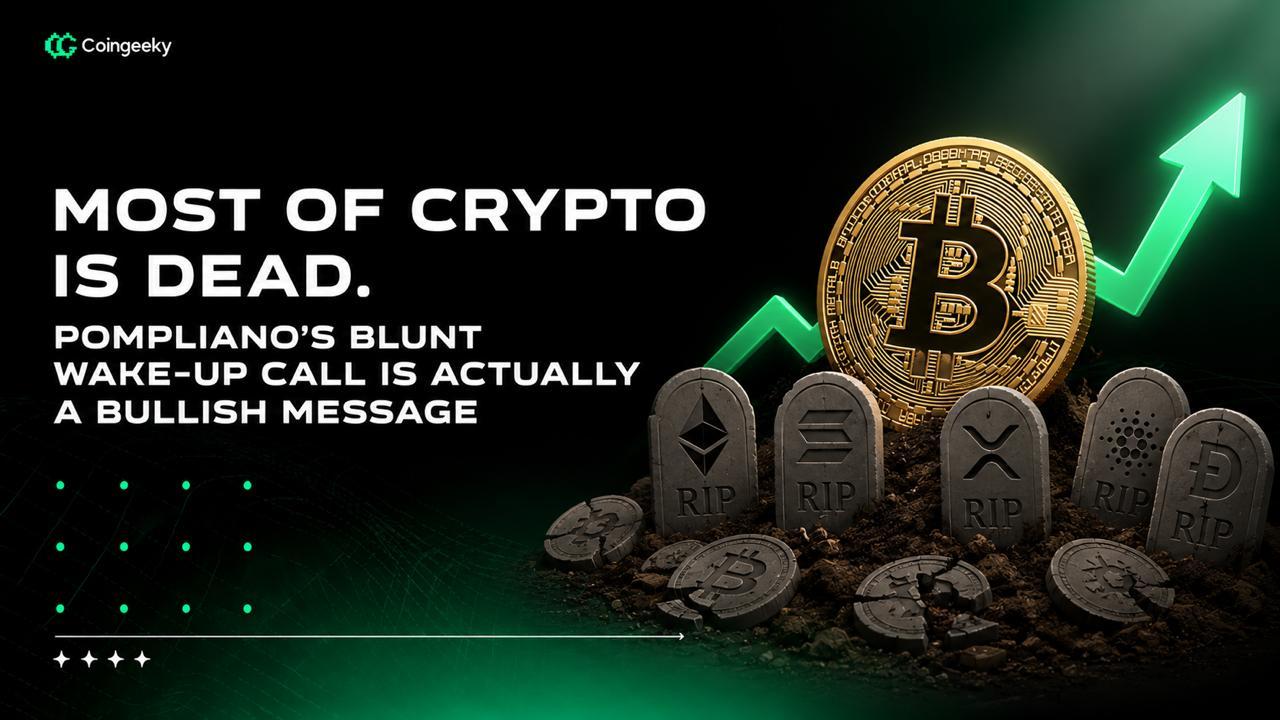
For most of its existence, blockchain technology has been explained through the lens of what it isn't. It isn't a bank. It isn't controlled by any government. It isn't your grandfather's investment. That framing — defined by negation — kept blockchain on the fringes of serious conversation for years. That era is over.
What industry leaders are now describing isn't a speculative asset class or a niche technology experiment. It's a foundational infrastructure shift — one that could rewrite how value moves, how data is owned, and how trust is established between strangers across the globe.
The Internet Finished Half the Job
When the internet was built, it solved the problem of sharing information. Anyone, anywhere, could read, write, and distribute content freely. But the internet was never designed to transfer value. That gap — the inability to move something of worth between two parties without a trusted intermediary — is what banks, brokers, and payment processors have filled for decades, collecting tolls at every step.
Blockchain completes the circuit. Polygon CEO Marc Boiron frames it as building a "trustless internet" — a version of the web where users don't have to rely on corporations to store and manage their data. On a blockchain, data is stored on a distributed network, accessible at any time and portable to any platform — users can choose exactly what to share, and even monetize it themselves instead of having it harvested by others.
Finance Is Just the Beginning
The financial use cases get the most attention, and for good reason. On a crypto platform, a trade and its settlement occur nearly simultaneously — unlike traditional markets that operate around opening and closing bells, crypto platforms run 24/7/365. Wallets are beginning to replace the combined function of bank accounts and brokerage accounts, letting users access financial instruments directly without intermediaries.
But the transformation doesn't stop at finance. Blockchain's ability to verify content authenticity has direct implications for AI‑generated misinformation — original content stored on‑chain can be verified, while anything that can't be traced to the blockchain may reasonably be treated as synthetic. In music, blockchain ledgers can reduce disputes and expose how music rights and payments are actually recorded. In gaming, it can give players genuine ownership over digital items they've spent years building — something centralized platforms have never offered.
The Credibility Gap Is Closing
The honest obstacle isn't technical anymore. The infrastructure is largely ready. The challenge is trust — institutional, regulatory, and cultural.
Those who've watched the industry recognize the pattern: in the late 1990s, entering a credit card number on a website felt reckless to most people. The technology was functional; the trust wasn't there yet. The crypto industry is moving through the same transition, just faster and with higher stakes.
Institutional players are no longer watching from the sidelines — major asset managers, stablecoin issuers, and even central banks are quietly building on blockchain rails. The conversation inside boardrooms has shifted from "should we explore this?" to "which chain do we build on?"
Building the Next Layer of Civilization
This idea that the crypto industry will "grow up" is no longer just a guess; the topic has changed from the risky speculation of the past to the complex details of a new global financial system.
That vision is easy to dismiss as hyperbole. It's harder to dismiss when JPMorgan is launching tokenized money market funds on Ethereum, when Meta is paying creators in stablecoins, and when governments are building strategic Bitcoin reserves.
The universe being built on blockchain isn't arriving all at once. It's being assembled piece by piece, transaction by transaction, chain by chain. But it is being built — and the builders are no longer just idealists. They're the largest financial institutions on earth. That changes everything.