
For years, the intersection of blockchain and federal oversight has been defined by a "gray area" of uncertainty. However, a significant shift is occurring within the halls of the U.S. Commodity Futures Trading Commission (CFTC). By officially naming the inaugural staff for its Innovation Task Force, the agency is moving beyond theoretical policy and into the realm of active execution.
From Blueprint to Boardroom
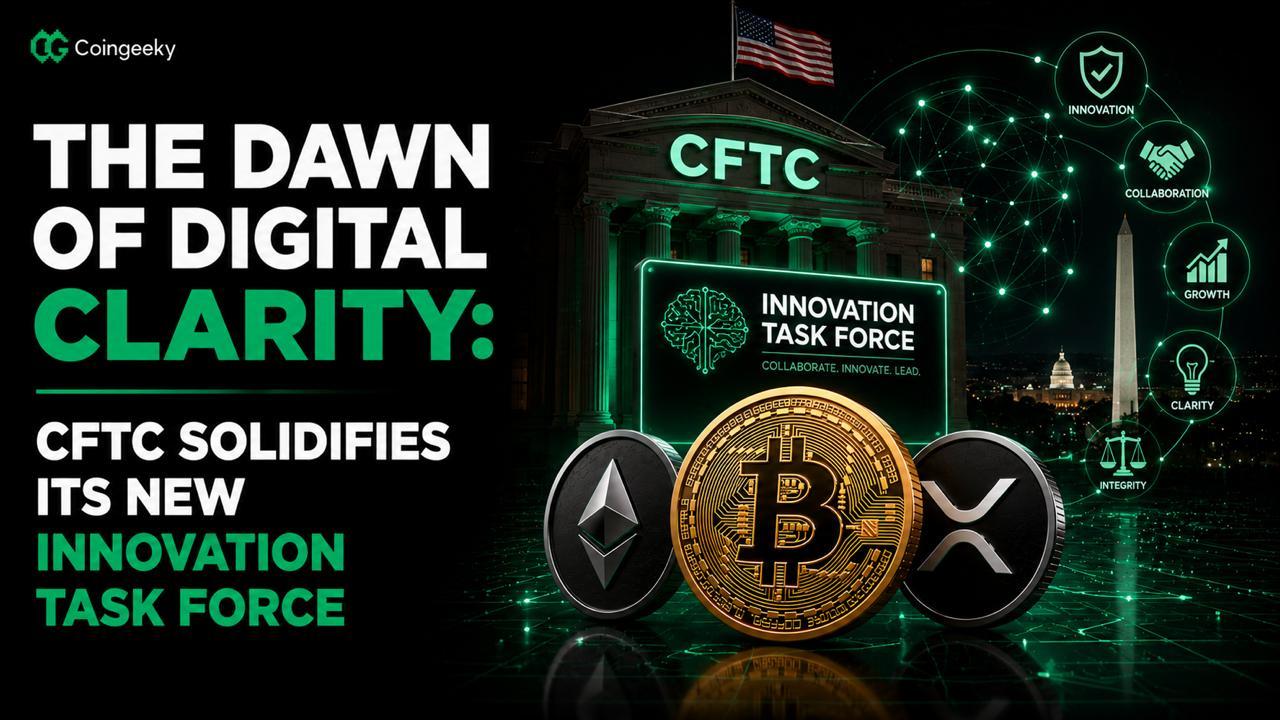
On April 10, 2026, the CFTC transitioned its ambitious Innovation Task Force from a conceptual initiative to an operational reality. Led by Michael J. Passalacqua, the five‑member team comprising Hank Balaban, Sam Canavos, Mark Fajfar, Eugene Gonzalez IV, and Dina Moussa represents the agency’s first dedicated strike team focused on the "frontier" of finance.
This move follows the groundwork laid earlier this year by Chairman Michael S. Selig, who sought to bridge the gap between traditional commodity regulation and the rapidly evolving world of decentralized finance (DeFi).
A Three‑Pronged Mandate
The task force isn't just focused on Bitcoin or Ethereum. Its mission is intentionally broad, covering three critical pillars of modern technology:
Crypto Assets & Blockchain: Establishing definitive rules for digital commodities and decentralized protocols.
Artificial Intelligence: Examining how autonomous systems impact market integrity and trading.
Prediction Markets: Regulating event contracts and emerging speculative platforms.
Bridging the Jurisdictional Divide
One of the most persistent hurdles in U.S. crypto regulation has been the "turf war" between the CFTC and the SEC. To address this, the Innovation Task Force has a formal mandate to coordinate with the SEC’s own Crypto Task Force. This collaborative approach aims to eliminate conflicting guidance that has historically stifled domestic innovation.
Industry giants like Coinbase, Ripple, and Solana Labs—already part of the CFTC’s Innovation Advisory Committee—now have a direct operational channel to voice concerns. This is particularly vital for DeFi developers, who are eager to learn whether their protocols must register as designated contract markets.
The Road Ahead: What to Expect
While the staffing of the task force is a milestone, the industry is still waiting for the first wave of formal rulemaking or "no‑action" letters. For now, the primary value is accessibility. Exchanges and compliance teams finally have identifiable contacts within the agency. In a market currently gripped by "Extreme Fear," according to the latest sentiment indices, this structural stability may be the first step toward the institutional confidence needed for the next wave of growth.