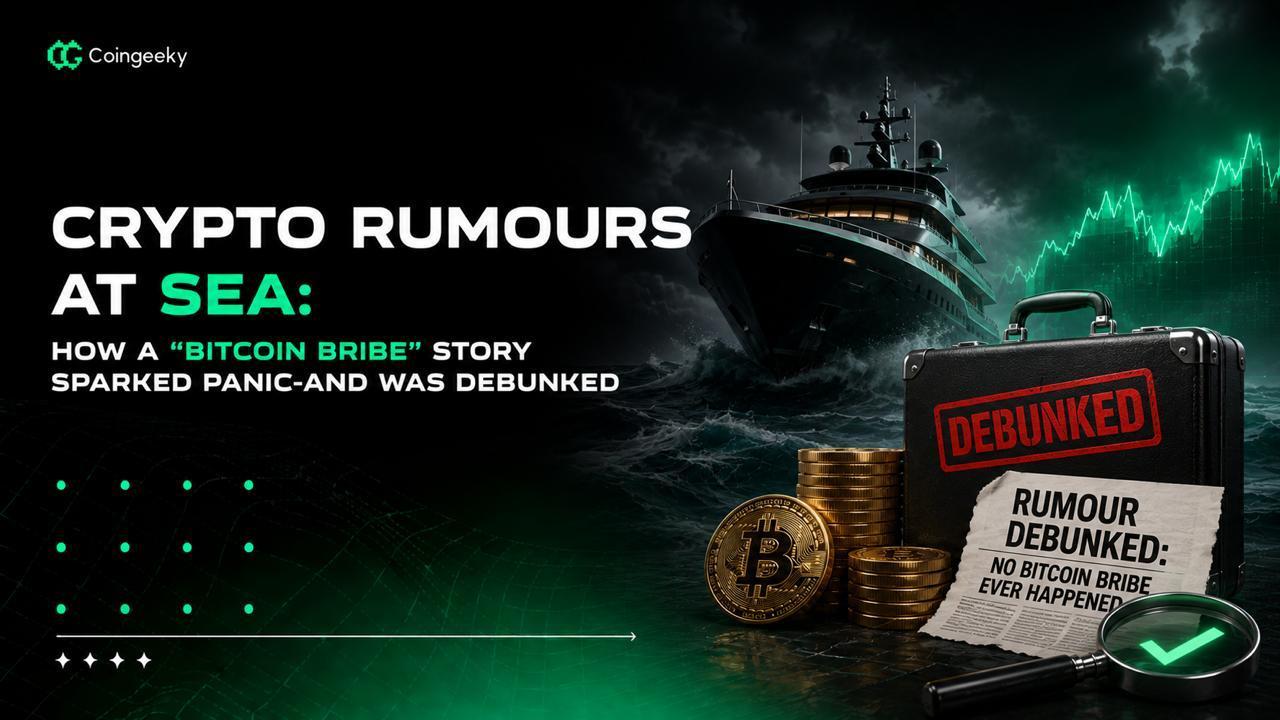

In a tense moment in the Middle East, an Indian oil tanker, Sanmar Herald, found itself under fire while attempting to cross the strategically vital Strait of Hormuz. The April 18 incident forced not one, but two Indian vessels to abruptly turn back after Iranian forces opened fire.
The situation quickly escalated beyond a maritime security issue. Within hours, speculation flooded social media and news platforms, linking this to an alleged cryptocurrency payment gone wrong.
The Viral Claim: Crypto Payments for Safe Passage
Reports began circulating that the ship’s crew had attempted to secure safe passage by paying intermediaries—possibly in cryptocurrency—who claimed ties to Iranian authorities. Some versions of the story suggested the vessel had fallen victim to a scam, paying cybercriminals posing as officials.
The narrative gained traction because it fit a broader fear: that digital currencies are increasingly being used in opaque, high‑risk environments where verification is difficult and fraud is easy.
Government Response: “Completely False”
India’s government moved swiftly to shut down the rumours. Officials flatly denied that any Indian ship had paid anything, in cash or cryptocurrency, to get through the strait.
A senior shipping official described the claims as “fake news,” emphasizing that there was no evidence linking any financial transaction to the incident. The ship’s owners also issued a statement rejecting the allegations, confirming that no such payment had taken place.
Authorities further clarified that the firing incident and the circulating scam narrative were unrelated events.
The Real Risk: Scams in High‑Tension Zones
Even though the specific claims were debunked, experts warn that the underlying threat is real. Maritime risk analysts have highlighted a growing trend of scammers targeting ship operators in conflict zones. These fraudsters often impersonate military or government officials, offering “safe passage” in exchange for cryptocurrency payments.
In some cases, vessels have reportedly received messages demanding payment in Bitcoin or USDT, exploiting confusion and fear during geopolitical crises.
With hundreds of ships stranded in the region due to ongoing conflict, the environment is ripe for such deception.
Why the Strait of Hormuz Matters
The Strait of Hormuz is one of the most critical energy corridors in the world, handling roughly one‑fifth of global oil and gas flows.
Any trouble here, like from war, fake news, or cyber scams, can spread to other markets around the world and affect things like fuel prices, supply chains, and the stability of the economy.
The Bigger Picture: Misinformation Meets Crypto Anxiety
This episode highlights a powerful combination: geopolitical tension amplified by misinformation and crypto‑related fears. In today’s digital landscape, unverified claims can spread faster than official clarifications, shaping public perception before facts catch up.
The “crypto payment” story gained traction not because it was proven, but because it was plausible in a world where digital fraud and geopolitical uncertainty increasingly overlap.
A Lesson in Verification
As the dust settles, one takeaway stands out: not every viral story reflects reality. The Sanmar Herald incident shows how important it is to check information, especially when it has to do with complicated areas of technology, money, and global conflict.
While no crypto payment was made in this case, the broader risks of scams and misinformation remain very real. When there is a lot at stake, like in global shipping lanes, even a rumor can be just as bad as the truth.