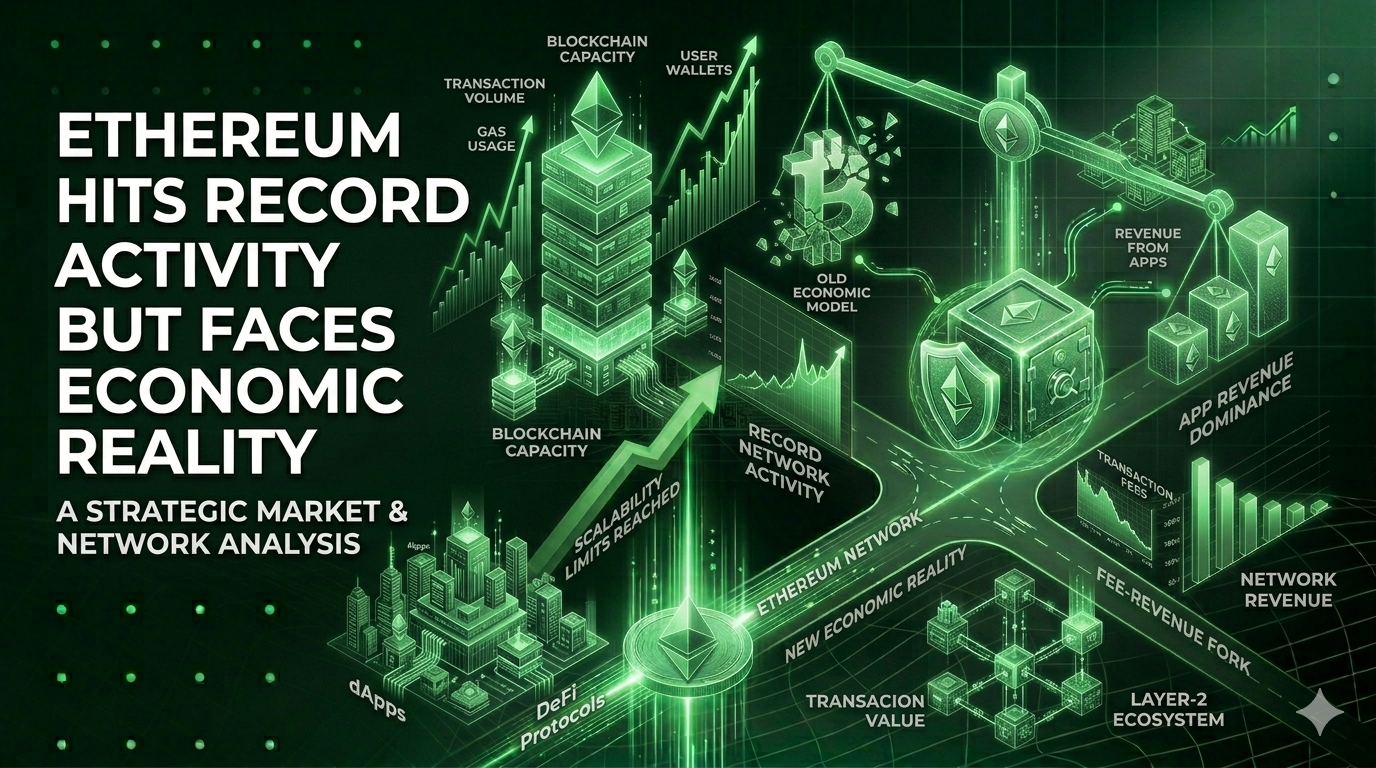

Ethereum has just completed its busiest quarter ever, marking a major milestone in its multi‑year recovery. After a prolonged slowdown in 2023, the network has rebounded strongly, with on‑chain activity reaching new highs. But even though usage is going through the roof, the bigger picture is more complicated, showing that there is a disconnect between network growth and market performance.
A Historic Surge in Network Activity
In the first quarter of 2026, Ethereum processed over 200 million transactions, the first time it has crossed this milestone. This represents a sharp increase from previous quarters and more than doubles the activity seen during its 2023 lows.
The growth signals a strong comeback for the network, following a period of stagnation. Throughout 2024, transaction volumes hovered at moderate levels, but momentum began building in 2025 and accelerated into 2026. This recovery reflects renewed interest and expanding use cases across the ecosystem.
The Role of Layer 2 Networks
Layer 2 solutions, which are networks built on top of Ethereum that make transactions go more quickly, are a big part of this growth. These kinds of platforms handle a lot of activity away from the main chain and then settle transactions back on Ethereum.
This approach reduces costs and increases speed, making the network more accessible for everyday use. However, it also means that much of the activity is happening indirectly, with the main blockchain acting as a settlement layer rather than the primary execution environment.
Stablecoins Fueling Demand
Another major factor behind Ethereum’s record‑breaking quarter is the rise of stablecoins. The total supply of stablecoins on the network has reached approximately $180 billion, accounting for a large share of global activity.
Stablecoins are widely used for payments, trading, and decentralized finance applications. Their increasing adoption has led to higher transaction volumes, contributing significantly to Ethereum’s overall growth.
The Disconnect Between Usage and Price
Despite this surge in activity, Ethereum’s price has not kept pace. The asset remains significantly below its previous highs, even as network usage reaches record levels.
This disconnect highlights a shift in how value is generated within the ecosystem. Historically, increased activity often translated into higher fees and stronger price performance. Today, that relationship is less direct.
The Impact of Network Upgrades
One key reason for this shift is the impact of recent upgrades that have reduced transaction costs, especially for Layer 2 networks. While this has made the ecosystem more efficient, it has also reduced the revenue generated per transaction on the base layer.
As a result, even though total activity has increased, it does not necessarily lead to proportional gains for the network’s native asset. This marks a significant change in Ethereum’s economic model.
A New Phase for Ethereum
The latest achievement for Ethereum is part of a larger trend of change. The network is no longer just a place to do direct transactions; it is now the base of a very complicated ecosystem with many layers.
The real question now is whether this growth is sustainable. If activity continues to rise and translates into meaningful adoption, it could eventually influence market performance. However, if the economic structure remains unchanged, high usage alone may not be enough to drive value.
Conclusion
Ethereum’s record‑breaking quarter is a clear sign of recovery and resilience. The network has successfully rebounded from its lows and is experiencing unprecedented levels of activity.
But that's not the end of the story. Ethereum is likely entering a new phase where growth is driven by infrastructure and scalability rather than direct economic returns, as shown by the difference between how much it is used and how much it costs. The network's future will depend a lot on how this balance changes over time.