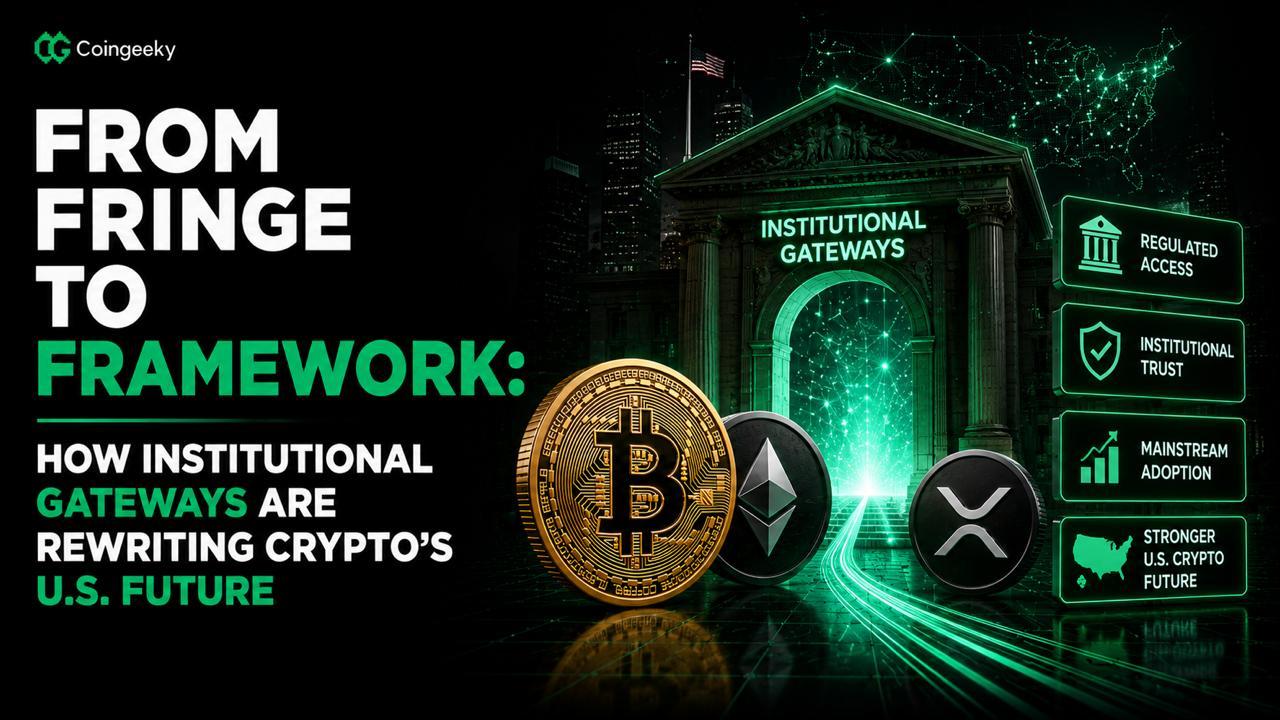

The cryptocurrency industry has long been driven by the idea of decentralization, which means cutting out middlemen and letting people do business freely. Yet, in a striking shift, the sector is increasingly embracing the very institutions it once sought to bypass. The latest example comes from a move by Anchorage Digital to integrate the Tron blockchain into its regulated platform, signaling a broader transformation in how digital assets are entering mainstream finance.
Crypto is no longer just an alternative system; it is being integrated into the traditional financial framework. This change is more than just another partnership; it is a sign of a deeper structural shift.
The Rise of Institutional Crypto Infrastructure
For years, many cryptocurrencies operated largely outside formal financial systems, relying on decentralized exchanges and peer‑to‑peer networks. While this enabled rapid growth, it also created barriers for institutional investors, who require regulatory clarity, custody solutions, and risk management frameworks.
Anchorage Digital, recognized as the only federally chartered crypto bank in the United States, has positioned itself as a bridge between these two worlds. By offering custody and settlement services, it allows hedge funds, asset managers, and other institutional players to engage with crypto assets without navigating the complexities of decentralized platforms.
With the addition of Tron’s native token (TRX), institutional clients can now gain exposure to one of the largest blockchain ecosystems through a regulated channel. This marks a significant shift: assets that were once primarily traded on decentralized platforms are now being packaged for institutional consumption.
Regulation as a Catalyst, Not a Constraint
In the past, regulation has been seen as an obstacle to new crypto ideas. However, recent events point to a more complex reality: regulation is starting to encourage adoption.
The integration of Tron into a federally regulated platform comes shortly after Justin Sun reached a settlement with the U.S. Securities and Exchange Commission over prior allegations, resolving the matter without admitting wrongdoing. While such scrutiny might once have deterred growth, it now appears to be part of a maturation process.
Unambiguous rules are a must for institutional investors. By aligning with compliant platforms, blockchain networks can access a vast pool of capital that has so far remained cautious.
In this context, regulation is less about restriction and more about legitimization. It provides the assurance that large investors need, effectively unlocking new demand.
The Strategic Importance of Custody
One part of crypto adoption that gets little attention is custody, which means keeping digital assets safe. For individual users, self‑custody through private wallets is common. For institutions, however, this approach introduces unacceptable risks.
Anchorage’s role as a custodian changes the equation. By safeguarding assets like TRX within a regulated environment, it removes a key barrier to entry. Institutions no longer need to build their own infrastructure or rely on less‑regulated solutions.
This shift could have ripple effects across the market. More assets held by reputable companies will likely lead to more institutional participation, both in short‑term trading and long‑term investment plans.
A Changing U.S. Crypto Landscape
The timing of this development is also significant. The United States is increasingly positioning itself as a global hub for digital assets, with political narratives emphasizing innovation and competitiveness in the crypto space.
This evolving stance has encouraged companies to expand their U.S. presence, even as they maintain global operations. Tron, whose foundation is based in Singapore, is now making a more deliberate push into the American market through institutional channels.
Previously, U.S. investors primarily accessed Tron through decentralized exchanges. While effective, these platforms lack the oversight and protections that institutional investors require. The Anchorage partnership changes that dynamic, offering a compliant pathway into the ecosystem.
The End of the “Either‑Or” Era
One of the most important things to remember is that the old divide between centralized and decentralized is starting to blur. The future of crypto is not about choosing one over the other, but about integrating both.
Decentralized networks like Tron continue to provide the underlying infrastructure for innovation. At the same time, centralized, regulated entities like Anchorage enable broader participation by making these networks accessible to traditional finance.
This hybrid model could define the next phase of crypto’s evolution. It allows the industry to retain its innovative edge while gaining the trust and capital of institutional players.
Looking Ahead
Adding Tron to Anchorage's platform is more than just a technical improvement; it shows the direction the industry is going. As more blockchain networks seek institutional access, partnerships with regulated entities are likely to become the norm rather than the exception.
For investors, this means greater accessibility and security. For the industry, it represents a step toward long‑term sustainability.
And for crypto itself, it marks a turning point: from a disruptive outsider to an integrated component of the global financial system.